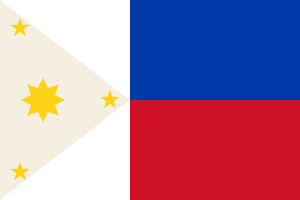
Daet is in Philippines today. The atlas holds 25 record volumes. The ground has flown 5 flags.
Nothing here has changed since this page began being watched on 2026-10-01. Follow what changes.
Comes out as a sheet for the reading room — what to ask for, who holds it, and every link written out in full.
This place
Where to begin
You know your family came from Daet. Here is the order I would work in, cheapest and easiest first — and what to do when that runs out.
-
Work out which country your year belongs to
This is the step almost everybody skips, and it is the commonest reason a record that exists cannot be found. The ground did not move; the border did. A baptism here in one decade may sit in a different country's archive from one twenty years later.
Years Who governed Whose archive 1570–1762  Spanish Philippines: Manila the capital, under New Spain
National Archives of the Philippines · PARES · FamilySearch 1762–1764  British occupation of Manila
no archive holds this yet 1764–1849 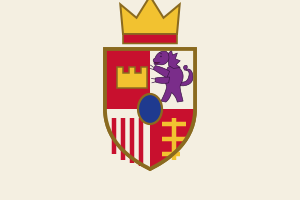 Spanish Philippines, restored
National Archives of the Philippines · PARES · FamilySearch 1849–1898 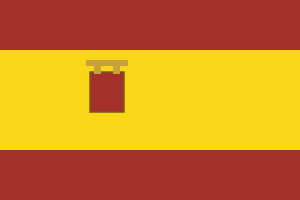 Spanish Philippines: surnames by decree, civil registers from 1888
National Archives of the Philippines · PARES · FamilySearch · National Library of the Philippines 1898–1941 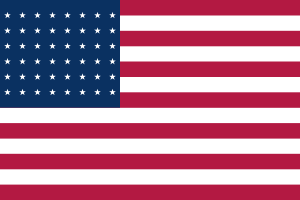 United States: Insular Government, then the Commonwealth
National Archives of the Philippines · National Library of the Philippines · FamilySearch 1941–1945 Japanese occupation; the Second Philippine Republic National Archives of the Philippines · FamilySearch 1945–2026 Philippines: independent from 4 July 1946 National Archives of the Philippines · National Library of the Philippines · FamilySearch Do this: take the year you are looking for, find its row, and note the archive. That is the one to search — not the one the village is in today.
-
When you run out — and you will
Everything above is what this atlas knows. It is not everything there is. Nine places in ten on this map have never been surveyed by anybody, so a gap here is usually our silence rather than the record's absence.
Do this: write to the archive named in the era table for your year, even if we hold nothing for it. Then tell us what you found — a gap somebody has personally closed is the most useful thing a stranger can give this map.
The archives named above: National Archives of the Philippines · PARES · FamilySearch · National Library of the Philippines. What each one holds and why.
How this place is on the map:
Whose archive this ground was
Daet sits in Manila, Southern Tagalog and Bicol. Which empire held it decides which archive holds its records — and for some of these years that is not the archive you would guess.
| Years | Who held it | Whose archive that means |
|---|---|---|
| 1570–1762 | Spanish Philippines: Manila the capital, under New Spain | National Archives of the Philippines · PARES · FamilySearch Martin de Goiti conquered Maynila in 1570 and Legazpi renamed it Nueva Castilla and made it the capital. The Spanish first landed in Bicol in 1567 at Gibal-ong in Sorsogon, and Bicol shipyards built Manila galleons. The Philippines was governed from Mexico City as part of the Viceroyalty of New Spain until 1821. |
| 1762–1764 | British occupation of Manila | no registers survive Archbishop Rojo signed the surrender of Manila on 30 October 1762. The Treaty of Paris of 10 February 1763, which ended the Seven Years' War, returned the Philippines to Spain. |
| 1764–1849 | Spanish Philippines, restored | National Archives of the Philippines · PARES · FamilySearch A census of 1818 recorded Spanish-Filipino families in several provinces, among them Albay (1,311) and Camarines Norte (1,810). |
| 1849–1898 | Spanish Philippines: surnames by decree, civil registers from 1888 | National Archives of the Philippines · PARES · FamilySearch · National Library of the Philippines Governor-General Narciso Claveria's decree of 21 November 1849 had a catalogue of 61,000 surnames sent to provincial heads, each surname going to one family per municipality; a Spanish surname therefore does not show Spanish ancestry. The catalogue (Catalogo alfabetico de apellidos) was reprinted by the National Archives in 1973. FamilySearch's local civil registration collection begins in 1888, coverage varies by locality, and Metro Manila has a separate collection. |
| 1898–1941 | United States: Insular Government, then the Commonwealth | National Archives of the Philippines · National Library of the Philippines · FamilySearch American forces took Manila on 13 August 1898 and the Treaty of Paris of 10 December 1898 ceded the islands; civil government under William Howard Taft began on 1 July 1901. Act No. 3753 of 1930, the Civil Registry Law, set up a national civil register with the Director of the National Library as Civil Registrar-General and took effect in 1931. |
| 1941–1945 | Japanese occupation; the Second Philippine Republic | National Archives of the Philippines · FamilySearch Manila was occupied on 2 January 1942 and the Japanese-sponsored Second Philippine Republic was proclaimed on 14 October 1943. The Battle of Manila ran from 3 February to 3 March 1945. |
| 1945–2026 | Philippines: independent from 4 July 1946 | National Archives of the Philippines · National Library of the Philippines · FamilySearch FamilySearch dates its local civil registration collection 1888-1986 (the description also says 1984), with the originals given as held by the Bureau of Records Management in Manila and the National Statistics Office. |
The volumes
Grouped by what it costs to look, most open first, which is the order worth trying them in. The film number and denomination are from FamilySearch's own catalogue. Nobody here has opened any of them. You can, though: mark the pages you have searched on any row and this browser will remember where you stopped.
- 1945-1948 ↗ 1945–1948
- 1947-1948 ↗ 1947–1948
- 1947-1949 ↗ 1947–1949
- 1949-1951 ↗ 1949–1951
- 1951-1953 ↗ 1951–1953
- 1953-1954 ↗ 1953–1954
- 1955-1956 ↗ 1955–1956
- 1956-1957 ↗ 1956–1957
- 1957-1959 ↗ 1957–1959
- 1959-1960 ↗ 1959–1960
- 1960-1962 ↗ 1960–1962
- 1962-1963 ↗ 1962–1963
- 1963-1964 ↗ 1963–1964
- 1964-1965 ↗ 1964–1965
- 1965-1967 ↗ 1965–1967
- 1967-1968 ↗ 1967–1968
- 1968-1969 ↗ 1968–1969
- 1969-1970 ↗ 1969–1970
- 1970-1971 ↗ 1970–1971
- 1971-1972 ↗ 1971–1972
- 1972-1973 ↗ 1972–1973
- 1973-1974 ↗ 1973–1974
- 1974-1975 ↗ 1974–1975
- 1975-1976 ↗ 1975–1976
- 1903 ↗ 1903–1903
The ground worth walking
Within 25 km — 4 places. These neighbours hold 134 catalogued volumes between them.
A register belongs to a parish, not to a village. A hamlet with no church of its own was written into the book of the church it walked to — and that book is catalogued under the other place's name. This is the ground to search before concluding a record does not exist.
- Basud5.3 km4 volumes
- Vinzons8.6 km17 volumes
- Labo14.2 km14 volumes
- Camarines Norte (area)23.0 km99 volumes
Sources for Philippines
The national and regional archives that cover Philippines, the national archive and library from Wikidata, and the 49 services that cover every country — FamilySearch, Ancestry, MyHeritage, Geneanet, Find a Grave and the rest — are the same for every place in Philippines, so they are listed once: all the sources for Philippines.
FamilySearch collections that reach here
A collection is a claim over an area, not a book standing in this town — so these are ranked by how specifically they reach Daet. A free account is needed to open the images, and some are restricted to a Family History Centre.
Worth searching, and worth knowing it is a national index rather than a local one.
- Philippines, Catholic Church Records, 1520-2014 ↗ 1520–2014 12,525,475 records 161 km
- Philippines Civil Registration (National), 1945-1996 ↗ 1945–1996 7,664,842 records 161 km
- Philippines, Neighborhood Census, 1836-1899 ↗ 1836–1899 5,872,340 records 161 km
…and 45 more: every FamilySearch collection for Philippines, on the country page.
See who held Daet between 1800 and 1920 →
The jurisdiction answer — which empire held this ground, and therefore
whose archive — could only be got at from the map until now. This opens it there, on
1863; drag the year from any point between 1570 and
2026.
Everything in Philippines · All 57354 places · Correct something on this page