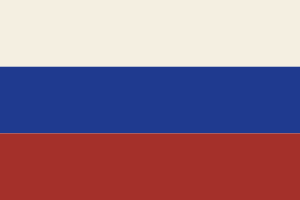
Poyarkovo is in Russia today. The atlas holds no record volumes for it yet, which is a gap in the atlas and not a finding about the records. The ground has flown 3 flags.
Last changed 2026-10-07 · first mapped 2026-09-23 Follow what changes.
Comes out as a sheet for the reading room — what to ask for, who holds it, and every link written out in full.
This place
Where to begin
You know your family came from Poyarkovo. Here is the order I would work in, cheapest and easiest first — and what to do when that runs out.
-
Work out which country your year belongs to
This is the step almost everybody skips, and it is the commonest reason a record that exists cannot be found. The ground did not move; the border did. A baptism here in one decade may sit in a different country's archive from one twenty years later.
Years Who governed Whose archive 1856–1858  Russian Empire: the Ust-Zeysky military outpost
no archive holds this yet 1858–1900 Russian Empire: the Amur region's seatno archive holds this yet 1900–1920 Russian Empire: the Boxer Rebellionno archive holds this yet 1920–1922 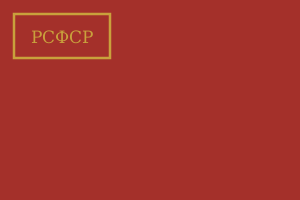 Far Eastern Republic
no archive holds this yet 1922–2026  Soviet Union, then Russia: Amur Oblast
no archive holds this yet Do this: take the year you are looking for, find its row, and note the archive. That is the one to search — not the one the village is in today.
-
When you run out — and you will
Everything above is what this atlas knows. It is not everything there is. Nine places in ten on this map have never been surveyed by anybody, so a gap here is usually our silence rather than the record's absence.
Do this: write to the archive named in the era table for your year, even if we hold nothing for it. Then tell us what you found — a gap somebody has personally closed is the most useful thing a stranger can give this map.
How this place is on the map:
Whose archive this ground was
Poyarkovo sits in Blagoveshchensk and the Amur frontier. Which empire held it decides which archive holds its records — and for some of these years that is not the archive you would guess.
| Years | Who held it | Whose archive that means |
|---|---|---|
| 1856–1858 | Russian Empire: the Ust-Zeysky military outpost | no registers survive The city began in 1856 as the military outpost of Ust-Zeysky at the mouth of the Zeya River. |
| 1858–1900 | Russian Empire: the Amur region's seat | no registers survive In 1858 Alexander II approved founding the city as the seat of the Amur region, to be named Blagoveshchensk. The Treaty of Aigun in 1858 and the Convention of Peking in 1860 made the Amur the border with China. |
| 1900–1920 | Russian Empire: the Boxer Rebellion | no registers survive In July 1900 Qing and Boxer forces shelled the city, local authorities expelled the Chinese community, and many people died in the Amur on 4-8 July. |
| 1920–1922 | Far Eastern Republic | no registers survive The city was part of the Far Eastern Republic, nominally independent but in practice a buffer state under the Russian SFSR. |
| 1922–2026 | Soviet Union, then Russia: Amur Oblast | no registers survive Blagoveshchensk became the administrative centre of Amur Oblast in 1932. It lies opposite the Chinese city of Heihe. |
No volumes recorded here yet.
The sources for Russia
National and regional sources that cover this ground whether or not anybody has walked it here — which makes them the answer, not the consolation, for a place with no volumes recorded on it. A country-wide body is listed whatever the distance; a provincial archive is a claim over its own province, so those are the nearest ones. 11 more cover Russia and are on the country sources page.
- Российский государственный архив древних актов (RGADA) Nobody has walked this one yet Moscow, Russia
The Russian State Archive of Ancient Acts — pre-1917 fonds, the deepest of the Russian state collections and the one a genealogist working before the revolution is sent to. Named and located from its own Wikidata item; NOT yet opened, so no claim is made here about what a visitor can reach. - Rossiyskiy gosudarstvennyy istoricheskiy arkhiv (Russian State Historical Archive, RGIA) Images, free, account needed St Petersburg, Russia
St Petersburg archive of Russian Empire central institutions. The site has a searchable catalogue of fonds, inventories, files and sheets with a filter for files that have scanned sheets, and indexes by personal name, geography, subject and topography, plus a reference library catalogue, virtual exhibitions and video… - Bundesarchiv A catalogue entry only — the paper is not photographed Koblenz, Germany
The German Federal Archives. Civil and military administration of the Prussian provinces, the wartime records, and the card indexes of the expelled — much of it for ground that is no longer German. - Государственный архив Российской Федерации (GARF) On paper, in the building Moscow, Russia
The State Archive of the Russian Federation — the central holder of the Russian and Soviet state record. OPENED 2026-09-29: the site is a reading-room archive, not an image portal. Its own front page is notices about reading room No. - ICRC Tracing Archives (Second World War Central Agency) On paper, in the building Geneva, Switzerland
Archive of the International Committee of the Red Cross in Geneva with the files of its wartime Central Agency for prisoners of war and civilian internees: nominal lists, transfer lists between camps, proof of detention in specific camps, liberation lists and death certificates, and index cards filed alphabetically by… - DRK-Suchdienst (German Red Cross Tracing Service) On paper, in the building Munich, Germany
The German Red Cross tracing service, whose Munich office has been the central information and documentation centre since 1982 and holds a central name card index there. Its site offers an online tracing request for relatives missing in connection with the Second World War or the division of Germany. - Germans from Russia Heritage Collection (North Dakota State University) Nobody has walked this one yet Fargo, North Dakota, USA
University library collection on Germans from Russia, in Fargo. The page lists photograph collections, oral histories and exhibits, search tools (finding aids, library catalogue, Digital Horizons) and research areas for genealogy, the history of Germans from Russia including villages, maps and Volga German history,… - Centropa Images, free, no account
An archive of Jewish family memory from Central and Eastern Europe. The home page states 1,230 interviews conducted in 15 European countries and about 25,000 family photographs, with a further Sephardic set for the Balkans and Turkey. - AGoFF - Arbeitsgemeinschaft ostdeutscher Familienforscher Nobody has walked this one yet
A society of more than 800 members worldwide researching families and regional history in the historic German settlement areas of central and eastern Europe. Its front page notes a finding aid for the NSDAP membership file held by the US National Archives, an index of East Prussian civilians deported by Russian forces… - Open List (Открытый список) An index only — no images
Community wiki-style database of people repressed for political reasons in the USSR, 1917-1991. The page reports 3,380,986 person records when read. Search is by surname, first name, patronymic, birth and death dates and place of residence, with * as a placeholder for an unknown name. - Mennonite Genealogy Inc. An index only — no images
A Mennonite genealogy resource site. The home page shows sections for International, Canada, Latin America, Poland, Prussia, Russia and the USA, a section on emigration from the Soviet Union in the 1920s, church registers, a new-files list, an FAQ and a sitemap. - VFFOW - Verein für Familienforschung in Ost- und Westpreußen An index only — no images
A society for family research in East and West Prussia. Its menu lists research aids (first steps, old handwriting, a place finder for East and West Prussia, administrative divisions, archive information for German, Polish and Russian archives), a databases section including an East and West Prussia researchers' file… - Polish Genealogical Society of America (PGSA) Partly free, partly paid
US society for Polish family history. The home page links surname databases for the USA, Poland, Lithuania, Ukraine, Russia and Belarus, plus sections on research sources, education, research services and downloads of the Rodziny journal. - Palatines to America German Genealogy Society Partly free, partly paid
A society founded in Columbus, Ohio in 1975 for the study of Germanic immigration to North America. It says it has about 800 members and chapters in Colorado, Indiana, New York, North Carolina, Ohio and Pennsylvania, holds a conference every other year, and publishes.
Sources for Russia
the national archive and library from Wikidata, and the 49 services that cover every country — FamilySearch, Ancestry, MyHeritage, Geneanet, Find a Grave and the rest — are the same for every place in Russia, so they are listed once: all the sources for Russia.
FamilySearch collections that reach here
A collection is a claim over an area, not a book standing in this town — so these are ranked by how specifically they reach Poyarkovo. A free account is needed to open the images, and some are restricted to a Family History Centre.
Worth searching, and worth knowing it is a national index rather than a local one.
- Ukraine, Kyiv, Confession Lists, 1741-1934 ↗ 1741–1934 51,059,892 records 2142 km
- Russia, Tver, Church Books, 1722-1918 ↗ 1722–1918 16,353,040 records 2142 km
- Russia, Samara, Church Books 1748-1934 ↗ 1748–1934 12,721,432 records 2142 km
…and 37 more: every FamilySearch collection for Russia, on the country page.
See who held Poyarkovo between 1800 and 1920 →
The jurisdiction answer — which empire held this ground, and therefore
whose archive — could only be got at from the map until now. This opens it there, on
1863; drag the year from any point between 1856 and
2026.
Everything in Russia · All 57354 places · Correct something on this page