Ébano is in Mexico today. The atlas holds 6 record volumes. The ground has flown 2 flags.
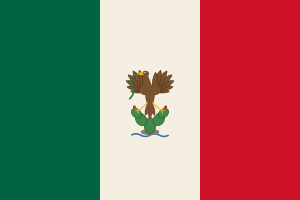
Last changed 2026-09-27 · first mapped 2026-09-23 Follow what changes.
Comes out as a sheet for the reading room — what to ask for, who holds it, and every link written out in full.
This place
Where to begin
You know your family came from Ébano. Here is the order I would work in, cheapest and easiest first — and what to do when that runs out.
-
Work out which country your year belongs to
This is the step almost everybody skips, and it is the commonest reason a record that exists cannot be found. The ground did not move; the border did. A baptism here in one decade may sit in a different country's archive from one twenty years later.
Years Who governed Whose archive 1577–1746  Nuevo Reino de León, Coahuila and Nueva Vizcaya
Archivo General de la Nación (México) · PARES · FamilySearch 1746–1776 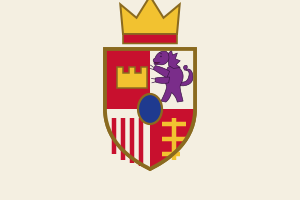 Nuevo Santander — Escandón's colony
Archivo General de la Nación (México) · PARES · FamilySearch 1776–1821 Provincias Internas — Eastern Internal ProvincesArchivo General de la Nación (México) · PARES · FamilySearch 1821–1836 Mexico — Coahuila y Tejas, Nuevo León, Tamaulipas Archivo General de la Nación (México) · FamilySearch 1836–1848 Mexico — northern frontier contested with Texas Archivo General de la Nación (México) · FamilySearch 1848–1867 Mexico — Rio Grande boundary Mi Registro Civil · FamilySearch · Archivo General de la Nación (México) 1867–2026 Coahuila, Nuevo León and Tamaulipas as separate states Mi Registro Civil · FamilySearch · Archivo General de la Nación (México) Do this: take the year you are looking for, find its row, and note the archive. That is the one to search — not the one the village is in today.
-
The things that catch people out here
1776–1821, Provincias Internas — Eastern Internal Provinces. Nuevo León and Nuevo Santander were placed under the Provincias Internas in 1776; when the commandancy was split in 1786 (1788 in another source) they, with Coahuila and Texas, formed the Eastern Internal Provinces. Nuevo Santander was renamed Tamaulipas after independence.
-
When you run out — and you will
Everything above is what this atlas knows. It is not everything there is. Nine places in ten on this map have never been surveyed by anybody, so a gap here is usually our silence rather than the record's absence.
Do this: write to the archive named in the era table for your year, even if we hold nothing for it. Then tell us what you found — a gap somebody has personally closed is the most useful thing a stranger can give this map.
The archives named above: Archivo General de la Nación (México) · PARES · FamilySearch · Mi Registro Civil. What each one holds and why.
How this place is on the map:
Whose archive this ground was
Ébano sits in North-east — Coahuila, Nuevo León, Tamaulipas. Which empire held it decides which archive holds its records — and for some of these years that is not the archive you would guess.
| Years | Who held it | Whose archive that means |
|---|---|---|
| 1577–1746 | Nuevo Reino de León, Coahuila and Nueva Vizcaya | Archivo General de la Nación (México) · PARES · FamilySearch The first Spanish settlement in Coahuila was Minas de la Trinidad in 1577. Philip II authorised the Nuevo Reyno de León in 1582, with Luis de Carabajal as its first governor, and Saltillo was settled in 1586 as part of Nueva Vizcaya. |
| 1746–1776 | Nuevo Santander — Escandón's colony | Archivo General de la Nación (México) · PARES · FamilySearch José de Escandón founded Nuevo Santander in 1747 (some sources say 1746), covering today's Tamaulipas and extending into southern Texas; Jiménez, founded in 1755, was its capital. |
| 1776–1821 | Provincias Internas — Eastern Internal Provinces | Archivo General de la Nación (México) · PARES · FamilySearch Nuevo León and Nuevo Santander were placed under the Provincias Internas in 1776; when the commandancy was split in 1786 (1788 in another source) they, with Coahuila and Texas, formed the Eastern Internal Provinces. Nuevo Santander was renamed Tamaulipas after independence. |
| 1821–1836 | Mexico — Coahuila y Tejas, Nuevo León, Tamaulipas | Archivo General de la Nación (México) · FamilySearch Under the 1824 constitution Coahuila was joined with Texas as Coahuila y Tejas, with Monclova as capital from 1833 to 1835, until Texas seceded in 1836. |
| 1836–1848 | Mexico — northern frontier contested with Texas | Archivo General de la Nación (México) · FamilySearch The strip between the Nueces and the Rio Grande was claimed by Texas but administered by Mexico. A provisional junta of the northern frontier, called the Republic of the Rio Grande, ran from 23 January to 6 November 1840 and met at Guerrero, Tamaulipas. |
| 1848–1867 | Mexico — Rio Grande boundary | Mi Registro Civil · FamilySearch · Archivo General de la Nación (México) The Treaty of Guadalupe Hidalgo (2 February 1848) made the Rio Grande the boundary, and residents of ceded land had one year to choose citizenship. Santiago Vidaurri annexed Coahuila to Nuevo León on 19 February 1856, and French forces held cities as far north as Monterrey. Civil registration began nationally on 28 July 1859. |
| 1867–2026 | Coahuila, Nuevo León and Tamaulipas as separate states | Mi Registro Civil · FamilySearch · Archivo General de la Nación (México) Coahuila's separation from Nuevo León is dated 1868. |
The volumes
Grouped by what it costs to look, most open first, which is the order worth trying them in. The film number and denomination are from FamilySearch's own catalogue. Nobody here has opened any of them. You can, though: mark the pages you have searched on any row and this browser will remember where you stopped.
- Defunciones 1963-1965 ↗ 1963–1965
- Defunciones 1966-1994 ↗ 1966–1994
- Defunciones 1991-1998 ↗ 1991–1998
- Defunciones 1992-1998 ↗ 1992–1998
- Defunciones 1994-1998 ↗ 1994–1998
- Defunciones 1995-1996 ↗ 1995–1996
Sources for Mexico
The national and regional archives that cover Mexico, the national archive and library from Wikidata, and the 49 services that cover every country — FamilySearch, Ancestry, MyHeritage, Geneanet, Find a Grave and the rest — are the same for every place in Mexico, so they are listed once: all the sources for Mexico.
FamilySearch collections that reach here
A collection is a claim over an area, not a book standing in this town — so these are ranked by how specifically they reach Ébano. A free account is needed to open the images, and some are restricted to a Family History Centre.
Narrower than the country but catalogued under some other district. Listed because a collection's title is not always where its records end, and never because it covers this ground.
- Mexico, Hidalgo, Catholic Church Records, 1546-1971 ↗ 1545–1971 5,103,959 records covers Hidalgo, Mexico 202 km
- Mexico, Querétaro, Catholic Church Records, 1590-1970 ↗ 1590–1970 2,737,274 records covers Querétaro, Mexico 215 km
- Mexico, Querétaro, Civil Registration, 1864-2005 ↗ 1864–2005 1,141,176 records covers Querétaro, Mexico 215 km
…and 57 more: every FamilySearch collection for Mexico, on the country page.
See who held Ébano between 1800 and 1920 →
The jurisdiction answer — which empire held this ground, and therefore
whose archive — could only be got at from the map until now. This opens it there, on
1863; drag the year from any point between 1577 and
2026.
Everything in Mexico · All 57354 places · Correct something on this page