Lagoa is in Portugal today. The atlas holds no record volumes for it yet, which is a gap in the atlas and not a finding about the records. The ground has flown 6 flags.
Last changed 2026-11-21 · first mapped 2026-09-23 Follow what changes.
Comes out as a sheet for the reading room — what to ask for, who holds it, and every link written out in full.
This place
Where to begin
You know your family came from Lagoa. Here is the order I would work in, cheapest and easiest first — and what to do when that runs out.
-
Work out which country your year belongs to
This is the step almost everybody skips, and it is the commonest reason a record that exists cannot be found. The ground did not move; the border did. A baptism here in one decade may sit in a different country's archive from one twenty years later.
Years Who governed Whose archive 1439–1580 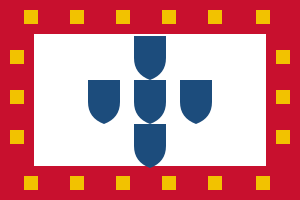 Kingdom of Portugal - the islands settled under captains-donatary
Torre do Tombo / Digitarq · FamilySearch 1580–1640  Iberian Union - the Spanish Habsburg crown over Portugal's realm
Torre do Tombo / Digitarq · FamilySearch 1640–1766  Kingdom of Portugal - the island captaincies
Torre do Tombo / Digitarq · FamilySearch 1766–1828 Kingdom of Portugal - Captaincy-General of the Azores, seat AngraTorre do Tombo / Digitarq · FamilySearch 1828–1832 Liberal Regency of Angra - Terceira as the seat of the constitutional causeTorre do Tombo / Digitarq · FamilySearch 1832–1895 Kingdom of Portugal - Province of the Azores, then three districtsTorre do Tombo / Digitarq · FamilySearch 1895–1910 Kingdom of Portugal - districts with administrative autonomyTorre do Tombo / Digitarq · FamilySearch 1910–1933 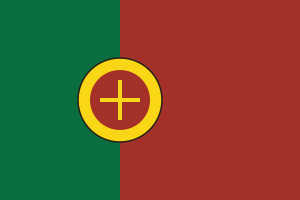 Portuguese Republic (First Republic)
Torre do Tombo / Digitarq · FamilySearch 1933–1974 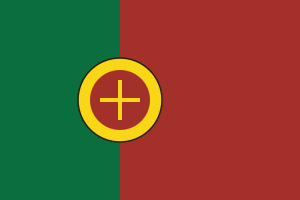 Estado Novo
Torre do Tombo / Digitarq · FamilySearch 1974–1976  Portuguese Republic - the transition to autonomy
Torre do Tombo / Digitarq · FamilySearch 1976–2026 Portuguese Republic - Autonomous Region of the AzoresTorre do Tombo / Digitarq · FamilySearch Do this: take the year you are looking for, find its row, and note the archive. That is the one to search — not the one the village is in today.
-
The things that catch people out here
1640–1766, Kingdom of Portugal - the island captaincies. The islands returned to a Portuguese king in 1640 and were still governed as separate captaincies; the captaincies were abolished by the Pombaline decree of 2 August 1766. Parish registers of this period sit in the three regional archives, not in one island series.
1828–1832, Liberal Regency of Angra - Terceira as the seat of the constitutional cause. Liberals took the fortress at Angra on 12 July 1828 and the Junta Provisória proclaimed the Regency of Angra on 28 October 1828 (the 1829-1832 span often quoted is later than that source's start date); the Miguelists lost the Battle of Praia on 11 August 1829, the Marquis of Palmela reached Angra on 15 March 1830, and Liberal troops entered Ponta Delgada on 3 August 1831. D. Pedro reached Ponta Delgada on 22 February 1832 and the expedition left for Mindelo on 27 June 1832. Which side held an island at a given date mattered to who governed and taxed it, so check the date before reading an administrative record as 'Portuguese' in general.
1895–1910, Kingdom of Portugal - districts with administrative autonomy. The decree of 2 March 1895 gave administrative autonomy to districts that asked for it by a two-thirds majority: Ponta Delgada joined in 1895 and Angra in 1898, and the Horta district never asked. This was local administration inside the Kingdom, not the political autonomy of 1976.
1910–1933, Portuguese Republic (First Republic). The Republic was proclaimed on 5 October 1910 and the law separating Church and State was passed on 20 April 1911. The Civil Registry Code of 18 February 1911 made civil registration compulsory, and genealogy sources give 1 April 1911 as the date from which the civil register, not the parish book, was the legal record; pre-1911 parish books were ordered moved to the civil registry offices. The Azores portal's online parish registers end in 1911.
1933–1974, Estado Novo. The Estado Novo ran from 11 April 1933 (constitution approved by referendum on 19 March 1933) to 25 April 1974. The Portuguese Wikipedia history of the Azores says nothing politically significant changed in the Azores under it before 1976; the First Azorean Congress met in 1938, and Britain was granted bases in the Azores in 1943 (Lajes on Terceira, 1944 agreement), which is where foreign service records can enter a family's story.
-
When you run out — and you will
Everything above is what this atlas knows. It is not everything there is. Nine places in ten on this map have never been surveyed by anybody, so a gap here is usually our silence rather than the record's absence.
Do this: write to the archive named in the era table for your year, even if we hold nothing for it. Then tell us what you found — a gap somebody has personally closed is the most useful thing a stranger can give this map.
The archives named above: Torre do Tombo / Digitarq · FamilySearch. What each one holds and why.
How this place is on the map:
Whose archive this ground was
Lagoa sits in The Azores - nine islands. Which empire held it decides which archive holds its records — and for some of these years that is not the archive you would guess.
| Years | Who held it | Whose archive that means |
|---|---|---|
| 1439–1580 | Kingdom of Portugal - the islands settled under captains-donatary | Torre do Tombo / Digitarq · FamilySearch Uninhabited until Portuguese settlement: a royal charter of 2 July 1439 authorised it and Santa Maria was settled that year under Gonçalo Velho, the first captain-donatary (the traditional landing date on Santa Maria is 15 August 1432, and early dates vary by source); São Miguel followed by about 1444, Terceira about 1450, Faial and Pico before 1466, Flores and Corvo were reached in 1452. Settlers came from mainland Portugal, with people from Flanders recorded on Terceira and enslaved Africans; the Diocese of Angra was created on 5 November 1534, and an earthquake and landslide buried most of Vila Franca do Campo on 21-22 October 1522, after which Ponta Delgada became the capital of São Miguel. The Azores government portal's online parish registers run from 1541. |
| 1580–1640 | Iberian Union - the Spanish Habsburg crown over Portugal's realm | Torre do Tombo / Digitarq · FamilySearch After the old king Henrique died on 31 January 1580 the succession passed to Philip II; São Miguel's councils pledged loyalty to him on 31 January 1581, but Terceira backed António, Prior of Crato, and beat a Spanish force at the Battle of Salga on 25 July 1581. A Franco-Portuguese fleet was defeated off São Miguel on 26 July 1582, and the Spanish landed on Terceira on 26 July 1583 and sacked Angra for three days. Portugal's own monarchy returned in 1640. |
| 1640–1766 | Kingdom of Portugal - the island captaincies | Torre do Tombo / Digitarq · FamilySearch The islands returned to a Portuguese king in 1640 and were still governed as separate captaincies; the captaincies were abolished by the Pombaline decree of 2 August 1766. Parish registers of this period sit in the three regional archives, not in one island series. |
| 1766–1828 | Kingdom of Portugal - Captaincy-General of the Azores, seat Angra | Torre do Tombo / Digitarq · FamilySearch On 2 August 1766 a single Captaincy-General of the Azores was created with its seat at Angra on Terceira (first holder D. Antão de Almada); an alvará of 23 February 1771 raised the archipelago to a province. The Constitution of 1822 introduced the term 'Ilhas Adjacentes' (adjacent islands), which stayed in use until 1976. |
| 1828–1832 | Liberal Regency of Angra - Terceira as the seat of the constitutional cause | Torre do Tombo / Digitarq · FamilySearch Liberals took the fortress at Angra on 12 July 1828 and the Junta Provisória proclaimed the Regency of Angra on 28 October 1828 (the 1829-1832 span often quoted is later than that source's start date); the Miguelists lost the Battle of Praia on 11 August 1829, the Marquis of Palmela reached Angra on 15 March 1830, and Liberal troops entered Ponta Delgada on 3 August 1831. D. Pedro reached Ponta Delgada on 22 February 1832 and the expedition left for Mindelo on 27 June 1832. Which side held an island at a given date mattered to who governed and taxed it, so check the date before reading an administrative record as 'Portuguese' in general. |
| 1832–1895 | Kingdom of Portugal - Province of the Azores, then three districts | Torre do Tombo / Digitarq · FamilySearch Decree no. 28 of 4 June 1832 abolished the Captaincy-General and created the Province of the Azores seated at Angra; decree no. 64 of 28 June 1833 split it in two, and the 1836 Administrative Code made three districts. The registers are kept by three regional archives: Ponta Delgada (Santa Maria and São Miguel), Angra do Heroísmo (Terceira, Graciosa, São Jorge) and Horta (Faial, Pico, Flores, Corvo); the Horta archive was created in 1965 and holds parish, notarial and civil material. Parish registers pass from the civil registry offices to the regional archives after 100 years, in five-year transfers. |
| 1895–1910 | Kingdom of Portugal - districts with administrative autonomy | Torre do Tombo / Digitarq · FamilySearch The decree of 2 March 1895 gave administrative autonomy to districts that asked for it by a two-thirds majority: Ponta Delgada joined in 1895 and Angra in 1898, and the Horta district never asked. This was local administration inside the Kingdom, not the political autonomy of 1976. |
| 1910–1933 | Portuguese Republic (First Republic) | Torre do Tombo / Digitarq · FamilySearch The Republic was proclaimed on 5 October 1910 and the law separating Church and State was passed on 20 April 1911. The Civil Registry Code of 18 February 1911 made civil registration compulsory, and genealogy sources give 1 April 1911 as the date from which the civil register, not the parish book, was the legal record; pre-1911 parish books were ordered moved to the civil registry offices. The Azores portal's online parish registers end in 1911. |
| 1933–1974 | Estado Novo | Torre do Tombo / Digitarq · FamilySearch The Estado Novo ran from 11 April 1933 (constitution approved by referendum on 19 March 1933) to 25 April 1974. The Portuguese Wikipedia history of the Azores says nothing politically significant changed in the Azores under it before 1976; the First Azorean Congress met in 1938, and Britain was granted bases in the Azores in 1943 (Lajes on Terceira, 1944 agreement), which is where foreign service records can enter a family's story. |
| 1974–1976 | Portuguese Republic - the transition to autonomy | Torre do Tombo / Digitarq · FamilySearch The Carnation Revolution of 25 April 1974 ended the Estado Novo. The Constitution of 2 April 1976 recognised political autonomy for the Azores, the provisional statute followed in Decree-Law 318-B/76 of 30 April 1976, and the first regional elections were held on 27 June 1976. |
| 1976–2026 | Portuguese Republic - Autonomous Region of the Azores | Torre do Tombo / Digitarq · FamilySearch The regional assembly's constituent session met in Horta on 21 July 1976 and the first Regional Government took office on 8 September 1976. Parish registers 1541-1911 and passport registers are searchable on the regional portal, with originals in the Ponta Delgada, Angra do Heroísmo and Horta archives; registers pass to those archives 100 years after the last entry. |
No volumes recorded here yet.
The ground worth walking
Within 25 km — 2 places.
A register belongs to a parish, not to a village. A hamlet with no church of its own was written into the book of the church it walked to — and that book is catalogued under the other place's name. This is the ground to search before concluding a record does not exist.
Correctly placed and unread. A gap here is this atlas's silence, not the record's — the registers may well exist and nobody has walked them.
The sources for Portugal
National and regional sources that cover this ground whether or not anybody has walked it here — which makes them the answer, not the consolation, for a place with no volumes recorded on it. A country-wide body is listed whatever the distance; a provincial archive is a claim over its own province, so those are the nearest ones. 15 more cover Portugal and are on the country sources page.
- Torre do Tombo / Digitarq Images, free, no account Lisbon, Portugal
The Portuguese national archive's scans, free. District archives publish parish registers through the same system. - Arquivo Nacional da Torre do Tombo Images, free, no account Lisbon, Portugal
Portugal's national archive, housed in its own building at the Alameda da Universidade, Lisbon, and run by DGLAB. When read (Nov 2026) the site showed a maintenance notice after a security problem, with only contacts, reading-room reservation (CRAV) and the DigitArq portal available, so it did not describe its… - Centro Português de Fotografia A catalogue entry only — the paper is not photographed Porto, Portugal
Portuguese national photography centre in the former prison and appeal court in Porto, part of DGLAB. Its pages list a national photography collection, a collection of cameras and equipment, bibliographic holdings and acquisitions. - Arquivo Histórico da Marinha (Biblioteca Central de Marinha) A catalogue entry only — the paper is not photographed
Holds records of the Portuguese Navy covering about 277 years, including personnel, ships, organisations and legislation. The Biblioteca Central de Marinha page lists codices, loose documents, photographs, maps and ship plans, subjects including emigration, and private archives donated by naval personnel and families. - Instituto Diplomático — Arquivo e Biblioteca (Ministério dos Negócios Estrangeiros) A catalogue entry only — the paper is not photographed
Archive and library of the Portuguese foreign ministry's diplomatic institute. The reading-room page links an online catalogue and a section on personal archives, and highlights documents on Aristides de Sousa Mendes and on the two World Wars. - DIGIGOV — Diário do Governo (CEPESE) Images, free, no account
Digitised issues of the Portuguese official gazette, the Diário do Governo, close to 30,000 issues including supplements and extraordinary editions. Coverage runs from 16 September 1820 to 5 October 1910. - Hemeroteca Digital do Algarve (Universidade do Algarve) A catalogue entry only — the paper is not photographed
A collection of 316 periodical titles (newspapers, magazines, bulletins, almanacs) published in the Algarve from 1810. The digital collection can be searched by title, author, year and place, with full-text search; the physical collection is at the Biblioteca da Universidade do Algarve, Campus de Gambelas, Faro. - Casa de Sarmento — Centro de Estudos do Património (Universidade do Minho) A catalogue entry only — the paper is not photographed
Heritage studies centre in Guimarães, a unit of the University of Minho set up in 2017. Its collections include the Sociedade Martins Sarmento archive, a genealogical repository, the ArchivAVE collection, a postcard collection, and a digital newspaper library; - Arquivo Genealógico da Lourinhã Images, free, no account
A genealogy website for Lourinhã whose menu has sections for baptisms, marriages, deaths, military service, higher education and passport applications, plus about 22 family pages. The home page gives no coverage dates or access terms; its copyright notice reads 2022 and the contact is by email. - Genealogia do Algarve Images, free, account needed
A genealogy portal that aims to publish the family relationships of people born, married, lived or died in the Algarve. It is sponsored by the municipalities of Portimão, Albufeira, Lagoa and Monchique and ISMAT. - Sociedade Genealógica de São Jorge (SJGS) Partly free, partly paid
A genealogy society focused on the island of São Jorge in the Azores. Its site offers a searchable collections catalogue, digital databases and records, volunteer indexing projects, lookup and copy services, and links to Azores GenWeb and Tombo São Jorge. The page says its Sharefile system needs an annual membership; - Geneall.net — Portal de Genealogia Nobody has walked this one yet
A long-running Portuguese genealogy portal. Its home page, dated the day before I opened it, shows counts of 178,235 families, 5,172,206 people and 648,169 descendants of King Afonso Henriques. - Tombo.pt — registos paroquiais portugueses para genealogia Nobody has walked this one yet
A genealogy site (running since 2013) that organises parish books and civil registry information by Portuguese district, the Azores and Madeira, with notes on recent additions such as new parish books from the Porto district archive.
Sources for Portugal
the national archive and library from Wikidata, and the 49 services that cover every country — FamilySearch, Ancestry, MyHeritage, Geneanet, Find a Grave and the rest — are the same for every place in Portugal, so they are listed once: all the sources for Portugal.
FamilySearch collections that reach here
A collection is a claim over an area, not a book standing in this town — so these are ranked by how specifically they reach Lagoa. A free account is needed to open the images, and some are restricted to a Family History Centre.
Worth searching, and worth knowing it is a national index rather than a local one.
- Portugal, Lisbon, Catholic Church Records, 1334-1998 ↗ 1334–1998 3,120,218 records 1540 km
- Portugal, Coimbra, Catholic Church Records, 1459-1999 ↗ 1458–1999 2,016,191 records 1540 km
- Portugal, Viseu, Catholic Church Records, 1523-1989 ↗ 1522–1989 1,590,363 records 1540 km
…and 36 more: every FamilySearch collection for Portugal, on the country page.
See who held Lagoa between 1800 and 1920 →
The jurisdiction answer — which empire held this ground, and therefore
whose archive — could only be got at from the map until now. This opens it there, on
1863; drag the year from any point between 1439 and
2026.
Everything in Portugal · All 57354 places · Correct something on this page