Narva is in Estonia today. The atlas holds 125 record volumes. The ground has flown 8 flags.
Last changed 2026-09-27 · first mapped 2026-09-23 Follow what changes.
Comes out as a sheet for the reading room — what to ask for, who holds it, and every link written out in full.
This place
Where to begin
You know your family came from Narva. Here is the order I would work in, cheapest and easiest first — and what to do when that runs out.
-
Work out which country your year belongs to
This is the step almost everybody skips, and it is the commonest reason a record that exists cannot be found. The ground did not move; the border did. A baptism here in one decade may sit in a different country's archive from one twenty years later.
Years Who governed Whose archive 1241–1346 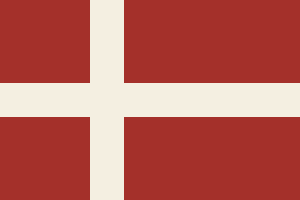 Danish Estonia — Narvia and its castle
no archive holds this yet 1346–1558 Livonian Order — Narva, with Muscovite Ivangorod opposite from 1492 no archive holds this yet 1558–1581 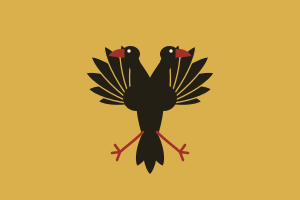 Tsardom of Russia — Livonian War occupation
no archive holds this yet 1581–1704  Sweden — Narva
Riksarkivet — Digitala forskarsalen 1704–1918  Russian Empire — Saint Petersburg Governorate
Saaga — Estonian National Archives 1918–1941  Republic of Estonia — Narva
Saaga — Estonian National Archives 1941–1944  German occupation — Narva evacuated January 1944
no archive holds this yet 1944–1991  Soviet Union — Narva in the Estonian SSR; Ivangorod in Leningrad Oblast
no archive holds this yet 1991–2026  Estonia (Narva) and Russia (Ivangorod)
Saaga — Estonian National Archives Do this: take the year you are looking for, find its row, and note the archive. That is the one to search — not the one the village is in today.
-
When you run out — and you will
Everything above is what this atlas knows. It is not everything there is. Nine places in ten on this map have never been surveyed by anybody, so a gap here is usually our silence rather than the record's absence.
Do this: write to the archive named in the era table for your year, even if we hold nothing for it. Then tell us what you found — a gap somebody has personally closed is the most useful thing a stranger can give this map.
The archives named above: Riksarkivet — Digitala forskarsalen · Saaga — Estonian National Archives. What each one holds and why.
How this place is on the map:
Whose archive this ground was
Narva sits in Narva and Ivangorod. Which empire held it decides which archive holds its records — and for some of these years that is not the archive you would guess.
| Years | Who held it | Whose archive that means |
|---|---|---|
| 1241–1346 | Danish Estonia — Narvia and its castle | no registers survive Before parish registers. Narva appears as the village Narvia in the Danish Census Book of 1241, the castle dates from the second half of the 13th century, and the town received Lübeck law from Valdemar IV of Denmark in 1345. |
| 1346–1558 | Livonian Order — Narva, with Muscovite Ivangorod opposite from 1492 | no registers survive The castle and town became a possession of the Livonian Order in 1346. Ivan III of Moscow founded the Ivangorod fortress across the river in 1492, which made the river a state frontier. |
| 1558–1581 | Tsardom of Russia — Livonian War occupation | no registers survive Muscovy held Narva from 1558 to 1581. |
| 1581–1704 | Sweden — Narva | Riksarkivet — Digitala forskarsalen Sweden conquered Narva in 1581. A Russian attempt to retake it in 1590–1595 failed, and Charles XII defeated Peter I at the battle of Narva in 1700. |
| 1704–1918 | Russian Empire — Saint Petersburg Governorate | Saaga — Estonian National Archives Peter I's forces took Narva in 1704. The town stayed on the Russian fortress list until 1863 and was administratively part of the Saint Petersburg Governorate until 1917. From the 17th century until 1945 Ivangorod was administratively part of Narva. |
| 1918–1941 | Republic of Estonia — Narva | Saaga — Estonian National Archives A referendum in July 1917 attached the Narva district to Estonia, and the town became part of the independent Republic of Estonia in 1918. Bolshevik troops held it from 28 November 1918 to 19 January 1919. |
| 1941–1944 | German occupation — Narva evacuated January 1944 | no registers survive The German invasion came in 1941 and German forces evacuated the city in January 1944. |
| 1944–1991 | Soviet Union — Narva in the Estonian SSR; Ivangorod in Leningrad Oblast | no registers survive In January 1945 Soviet authorities separated Ivangorod from Narva and Estonia and transferred it to the Leningrad Oblast of the Russian SFSR, where it became a town in its own right. |
| 1991–2026 | Estonia (Narva) and Russia (Ivangorod) | Saaga — Estonian National Archives Estonia regained independence in 1991, so the two banks of the river are now in different states and different archive systems. |
125 volumes, the first 25 listed
Grouped by what it costs to look, most open first, which is the order worth trying them in. The film number and denomination are from FamilySearch's own catalogue. Nobody here has opened any of them. You can, though: mark the pages you have searched on any row and this browser will remember where you stopped.
- Parish register (Personaalraamat) 1814-1837, 1970 ↗ 1814–1970 Evangelical
- Parish register (Personaalraamat) 1814-1837 Parish register (Personaalraamat) 1837-1883 ↗ 1814–1883 Evangelical
- Parish register (Personaalraamat) 1816-1870 ↗ 1816–1870 Evangelical
- Deaths (Surmad) 1834-1891 ↗ 1834–1891 Evangelical
- Deaths (Surmad) 1834-1891, 1921-1926 ↗ 1834–1926 Evangelical
- Declarations (Laulatatud) 1834-1891 ↗ 1834–1891 Evangelical
- Marriages (Abielud) 1834-1891 ↗ 1834–1891 Evangelical
- Marriages (Abielud) 1835-1891 ↗ 1835–1891 Evangelical
- Births (Sünnid) 1835-1840 (EAA.5378.001.0000001) ↗ 1835–1840 Roman Catholic
- Deaths (Surmad) 1835-1839 (EAA.5378.001.0000011) ↗ 1835–1839 Roman Catholic
- Marriages (Abiellumised) 1835-1841 (EAA.5378.001.0000008) ↗ 1835–1841 Roman Catholic
- Parish register (Personaalraamat) 1838-1887 ↗ 1838–1887 Evangelical
- Deaths (Surmad) 1839-1854 (EAA.5378.001.0000012) ↗ 1839–1854 Roman Catholic
- Births (Sünnid) 1840-1852 (EAA.5378.001.0000002) ↗ 1840–1852 Roman Catholic
- Marriages (Abiellumised) 1842-1849 (EAA.5378.001.0000009) ↗ 1842–1849 Roman Catholic
- Deaths (Surmad) 1847-1866 ↗ 1847–1866 Evangelical
- Marriages (Abielud) 1848-1891 ↗ 1848–1891 Evangelical
- Parish register (Personaalraamat) 1921-1928 Parish register (Personaalraamat) 1850-1860 ↗ 1850–1928 Evangelical
- Marriages (Abiellumised) 1850-1882 (EAA.5378.001.0000010) ↗ 1850–1882 Roman Catholic
- Births (Sünnid) 1853-1859 (EAA.5378.001.0000003) ↗ 1853–1859 Roman Catholic
- Births (Sünnid) 1860-1867 (EAA.5378.001.0000004) ↗ 1860–1867 Roman Catholic
- Parish register (Personaalraamat) 1861-1870 Parish register (Personaalraamat) 1871-1901 ↗ 1861–1901 Evangelical
- Births (Sünnid) 1866-1891 ↗ 1866–1891 Evangelical
- Parish register (Personaalraamat) 1866-1917 ↗ 1866–1917 Evangelical
- Deaths (Surmad) 1867-1891 ↗ 1867–1891 Evangelical
The ground worth walking
Within 25 km — 4 places. These neighbours hold 86 catalogued volumes between them.
A register belongs to a parish, not to a village. A hamlet with no church of its own was written into the book of the church it walked to — and that book is catalogued under the other place's name. This is the ground to search before concluding a record does not exist.
- Ivangorod1.6 km1 volume
- Bolshoye Kuzyomkino (Kosemkina parish)23.1 km44 volumes
- Kingisepp (Yamburg)23.2 km41 volumes
Correctly placed and unread. A gap here is this atlas's silence, not the record's — the registers may well exist and nobody has walked them.
Sources for Estonia
The national and regional archives that cover Estonia, the national archive and library from Wikidata, and the 49 services that cover every country — FamilySearch, Ancestry, MyHeritage, Geneanet, Find a Grave and the rest — are the same for every place in Estonia, so they are listed once: all the sources for Estonia.
FamilySearch collections that reach here
A collection is a claim over an area, not a book standing in this town — so these are ranked by how specifically they reach Narva. A free account is needed to open the images, and some are restricted to a Family History Centre.
Worth searching, and worth knowing it is a national index rather than a local one.
- Estonia, Church Books and Synagogue Registers, 1590-1941 ↗ 1590–1941 6,983,400 records 132 km
- Estonia, Lutheran Church Family Lists, 1603-1980 ↗ 1603–1980 2,804,748 records 132 km
- Estonia, Petseri County, Surname Register Cards, 1921-1923 ↗ 1921–1923 0 records 132 km
…and 11 more: every FamilySearch collection for Estonia, on the country page.
See who held Narva between 1800 and 1920 →
The jurisdiction answer — which empire held this ground, and therefore
whose archive — could only be got at from the map until now. This opens it there, on
1863; drag the year from any point between 1241 and
2026.
Everything in Estonia · All 57354 places · Correct something on this page