Panotla is in Mexico today. The atlas holds 25 record volumes. The ground has flown 2 flags.
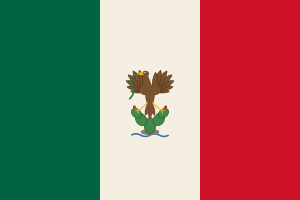
Last changed 2026-09-27 · first mapped 2026-09-23 Follow what changes.
Comes out as a sheet for the reading room — what to ask for, who holds it, and every link written out in full.
This place
Where to begin
You know your family came from Panotla. Here is the order I would work in, cheapest and easiest first — and what to do when that runs out.
-
Work out which country your year belongs to
This is the step almost everybody skips, and it is the commonest reason a record that exists cannot be found. The ground did not move; the border did. A baptism here in one decade may sit in a different country's archive from one twenty years later.
Years Who governed Whose archive 1325–1521 Tenochtitlan, city of the Mexica no archive holds this yet 1521–1786  Kingdom of New Spain — viceroyalty from 1535
Archivo General de la Nación (México) · PARES · FamilySearch 1786–1821 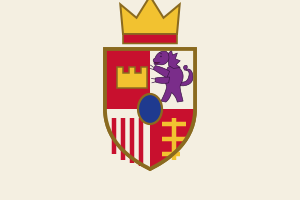 Viceroyalty of New Spain — intendancies of México and Puebla
Archivo General de la Nación (México) · PARES · FamilySearch 1821–1835 First Mexican Empire, then the federal republic Archivo General de la Nación (México) · FamilySearch 1835–1846 Centralist Republic — states made departments Archivo General de la Nación (México) · FamilySearch 1846–1864 Federal Republic restored — Reform Mi Registro Civil · FamilySearch · Archivo General de la Nación (México) 1864–1867 Second Mexican Empire Mi Registro Civil · FamilySearch · Archivo General de la Nación (México) 1867–2026 Restored Republic — Federal District, then Ciudad de México Mi Registro Civil · FamilySearch · Archivo General de la Nación (México) Do this: take the year you are looking for, find its row, and note the archive. That is the one to search — not the one the village is in today.
-
When you run out — and you will
Everything above is what this atlas knows. It is not everything there is. Nine places in ten on this map have never been surveyed by anybody, so a gap here is usually our silence rather than the record's absence.
Do this: write to the archive named in the era table for your year, even if we hold nothing for it. Then tell us what you found — a gap somebody has personally closed is the most useful thing a stranger can give this map.
The archives named above: Archivo General de la Nación (México) · PARES · FamilySearch · Mi Registro Civil. What each one holds and why.
How this place is on the map:
Whose archive this ground was
Panotla sits in Valley of Mexico and the central highlands. Which empire held it decides which archive holds its records — and for some of these years that is not the archive you would guess.
| Years | Who held it | Whose archive that means |
|---|---|---|
| 1325–1521 | Tenochtitlan, city of the Mexica | no registers survive Before registers. |
| 1521–1786 | Kingdom of New Spain — viceroyalty from 1535 | Archivo General de la Nación (México) · PARES · FamilySearch Tenochtitlan fell on 13 August 1521 and the city was rebuilt as Ciudad de México. The Audiencia of Mexico dates from 1527 and the viceroyalty from a decree of 12 October 1535, with Antonio de Mendoza as first viceroy. Parish books come from the dioceses (Tlaxcala is dated 1527, Mexico City 1530), with a copy kept in the diocesan archive; Cortés held the Marquesado del Valle, about 4,000 km² around Cuernavaca, from his title of 1529. |
| 1786–1821 | Viceroyalty of New Spain — intendancies of México and Puebla | Archivo General de la Nación (México) · PARES · FamilySearch Intendancies were created on the mainland from 1786, including México and Puebla de los Ángeles (Puebla is dated 1786 or 1787 depending on the passage). The Marquis's lands were confiscated in 1809. The declaration of independence is dated 27 or 28 September 1821. |
| 1821–1835 | First Mexican Empire, then the federal republic | Archivo General de la Nación (México) · FamilySearch The empire lasted from independence in 1821 to Iturbide's abdication on 19 March 1823. The territory around the capital was organised as the Federal District on 18 November 1824; the rest stayed in the State of Mexico, whose capital moved to Texcoco and later Toluca. |
| 1835–1846 | Centralist Republic — states made departments | Archivo General de la Nación (México) · FamilySearch The federal constitution was repealed on 23 October 1835 and the states became departments under the central government, until the 1824 constitution was restored on 22 August 1846. |
| 1846–1864 | Federal Republic restored — Reform | Mi Registro Civil · FamilySearch · Archivo General de la Nación (México) Civil registration was established on 28 July 1859 and records are held at municipio level, with the Federal District keeping its own in delegations. It was not vigorously enforced until 1867. |
| 1864–1867 | Second Mexican Empire | Mi Registro Civil · FamilySearch · Archivo General de la Nación (México) Maximilian accepted the crown on 10 April 1864 and reached the capital on 12 June 1864; French forces held central Mexico including Mexico City during the empire, which ended with his execution on 19 June 1867. |
| 1867–2026 | Restored Republic — Federal District, then Ciudad de México | Mi Registro Civil · FamilySearch · Archivo General de la Nación (México) Hidalgo (16 January 1869) was cut from the State of Mexico out of the districts of Tula, Tulancingo and Huejutla, and Morelos (17 April 1869) from the same state, so earlier events at Pachuca, Tulancingo or Cuernavaca are in the State of Mexico's papers. The Federal District was renamed Ciudad de México on 29 January 2016. |
The volumes
Grouped by what it costs to look, most open first, which is the order worth trying them in. The film number and denomination are from FamilySearch's own catalogue. Nobody here has opened any of them. You can, though: mark the pages you have searched on any row and this browser will remember where you stopped.
- Bautismos 1693-1723 ↗ 1693–1723
- Bautismos 1723-1744 ↗ 1723–1744
- Bautismos 1744-1822 ↗ 1744–1822
- Bautismos 1779-1794 ↗ 1779–1794
- Bautismos 1794-1822 ↗ 1794–1822
- Bautismos 1822-1849 ↗ 1822–1849
- Bautismos 1849-1876 ↗ 1849–1876
- Bautismos 1876-1893 ↗ 1876–1893
- Bautismos de hijos legítimos 1893-1906 ↗ 1893–1906
- Bautismos de hijos legítimos 1906-1923 ↗ 1906–1923
- Bautismos de hijos legítimos 1923-1935 ↗ 1923–1935
- Bautismos de hijos legítimos 1936-1952 ↗ 1936–1952
- Bautismos de hijos legítimos 1952-1960 ↗ 1952–1960
- Bautismos de hijos naturales 1893-1903, 1914-1931 ↗ 1893–1931
- Bautismos de hijos naturales 1931-1958 ↗ 1931–1958
- Confirmaciones 1769-1872, 1897-1939, 1945-1958 ↗ 1769–1958
- Defunciones 1693-1723 ↗ 1693–1723
- Defunciones 1733-1822 ↗ 1733–1822
- Defunciones 1776-1814 ↗ 1776–1814
- Defunciones 1814-1863 ↗ 1814–1863
- Defunciones 1863-1871 ↗ 1863–1871
- Defunciones 1870-1915 ↗ 1870–1915
- Defunciones 1915-1955 ↗ 1915–1955
- Información matrimonial 1892-1918 ↗ 1892–1918
- Información matrimonial 1893-1899 ↗ 1893–1899
The ground worth walking
Within 11 km — 9 places. These neighbours hold 975 catalogued volumes between them.
A register belongs to a parish, not to a village. A hamlet with no church of its own was written into the book of the church it walked to — and that book is catalogued under the other place's name. This is the ground to search before concluding a record does not exist.
- Tlaxcala de Xicohténcatl2.7 km145 volumes
- Santa Ana Nopalucan6.9 km18 volumes
- Huiloapan7.9 km4 volumes
- Apetatitlán de Antonio Carvajal8.2 km34 volumes
- Santa Ana Chiautempan8.7 km626 volumes
- Tetlatlahuca9.7 km13 volumes
- Tlaxcala10.2 km32 volumes
- San Miguel del Milagro10.7 km17 volumes
- Contla11.0 km86 volumes
Sources for Mexico
The national and regional archives that cover Mexico, the national archive and library from Wikidata, and the 49 services that cover every country — FamilySearch, Ancestry, MyHeritage, Geneanet, Find a Grave and the rest — are the same for every place in Mexico, so they are listed once: all the sources for Mexico.
FamilySearch collections that reach here
A collection is a claim over an area, not a book standing in this town — so these are ranked by how specifically they reach Panotla. A free account is needed to open the images, and some are restricted to a Family History Centre.
Narrower than the country but catalogued under some other district. Listed because a collection's title is not always where its records end, and never because it covers this ground.
- Mexico, Tlaxcala, Catholic Church Records, 1576-1994 ↗ 1575–1994 1,812,937 records covers Tlaxcala, Mexico 16 km
- Mexico, Tlaxcala, Civil Registration, 1867-1950 ↗ 1867–1950 522,456 records covers Tlaxcala, Mexico 16 km
- Mexico, Puebla, Catholic Church Records, 1545-2009 ↗ 1544–2009 7,154,158 records covers Puebla, Mexico 32 km
…and 57 more: every FamilySearch collection for Mexico, on the country page.
See who held Panotla between 1800 and 1920 →
The jurisdiction answer — which empire held this ground, and therefore
whose archive — could only be got at from the map until now. This opens it there, on
1863; drag the year from any point between 1325 and
2026.
Everything in Mexico · All 57354 places · Correct something on this page