San Pedro is in Bolivia today. The atlas holds 120 record volumes. The ground has flown 3 flags.
Last changed 2026-10-08 · first mapped 2026-09-23 Follow what changes.
Comes out as a sheet for the reading room — what to ask for, who holds it, and every link written out in full.
This place
Where to begin
You know your family came from San Pedro. Here is the order I would work in, cheapest and easiest first — and what to do when that runs out.
-
Work out which country your year belongs to
This is the step almost everybody skips, and it is the commonest reason a record that exists cannot be found. The ground did not move; the border did. A baptism here in one decade may sit in a different country's archive from one twenty years later.
Years Who governed Whose archive 1438–1548 Inca Qullasuyu, then Spanish conquest no archive holds this yet 1548–1776  Spanish Empire — Audiencia of Charcas, Viceroyalty of Peru
National Archive and Library of Bolivia · PARES · FamilySearch 1776–1809 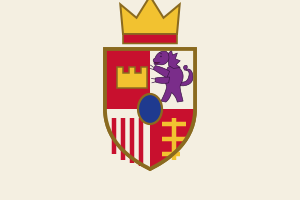 Spanish Empire — Viceroyalty of the Río de la Plata (Upper Peru)
National Archive and Library of Bolivia · PARES · FamilySearch 1809–1825 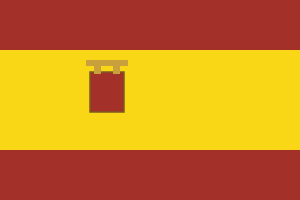 Contested — Upper Peru in the independence wars
National Archive and Library of Bolivia · FamilySearch 1825–1836 Republic of Bolivia National Archive and Library of Bolivia · FamilySearch 1836–1839 Bolivia within the Peru–Bolivian Confederation National Archive and Library of Bolivia · FamilySearch 1839–1940 Republic of Bolivia National Archive and Library of Bolivia · FamilySearch 1940–2026 Republic of Bolivia — civil registry FamilySearch Do this: take the year you are looking for, find its row, and note the archive. That is the one to search — not the one the village is in today.
-
The things that catch people out here
1548–1776, Spanish Empire — Audiencia of Charcas, Viceroyalty of Peru. The Audiencia of Charcas, seated at La Plata (now Sucre), is dated 4 September 1559 in one account and 1558 in another. The Archivo y Biblioteca Nacionales de Bolivia in Sucre was created in 1883 on the Audiencia's documentation, and its catalogued holdings include the Audiencia's papers for 1561-1825 and the public deeds of La Plata for 1548-1825. FamilySearch's Bolivian baptism collection begins in 1560.
1839–1940, Republic of Bolivia. In the War of the Pacific (1879-1884) Bolivia lost its Pacific coastline to Chile. FamilySearch's Bolivian marriage collection runs 1630-1940.
1940–2026, Republic of Bolivia — civil registry. Civil registration of births, marriages and deaths began in 1940 according to FamilySearch, though its register headings say 1898. A 1945 law let Bolivians born before 1940 who were not in the civil registry obtain a birth certificate with a baptismal record or witnesses; the Órgano Electoral Plurinacional in La Paz is the contact office.
-
When you run out — and you will
Everything above is what this atlas knows. It is not everything there is. Nine places in ten on this map have never been surveyed by anybody, so a gap here is usually our silence rather than the record's absence.
Do this: write to the archive named in the era table for your year, even if we hold nothing for it. Then tell us what you found — a gap somebody has personally closed is the most useful thing a stranger can give this map.
The archives named above: National Archive and Library of Bolivia · PARES · FamilySearch. What each one holds and why.
How this place is on the map:
Whose archive this ground was
San Pedro sits in La Paz, Oruro, Potosí, Sucre and Tarija — the Altiplano and the Charcas valleys. Which empire held it decides which archive holds its records — and for some of these years that is not the archive you would guess.
| Years | Who held it | Whose archive that means |
|---|---|---|
| 1438–1548 | Inca Qullasuyu, then Spanish conquest | no registers survive Before registers. Western Bolivia was part of the Inca province of Qullasuyu from 1438 and the Spanish conquest ran from 1524 to 1538; La Paz was founded in 1548. |
| 1548–1776 | Spanish Empire — Audiencia of Charcas, Viceroyalty of Peru | National Archive and Library of Bolivia · PARES · FamilySearch The Audiencia of Charcas, seated at La Plata (now Sucre), is dated 4 September 1559 in one account and 1558 in another. The Archivo y Biblioteca Nacionales de Bolivia in Sucre was created in 1883 on the Audiencia's documentation, and its catalogued holdings include the Audiencia's papers for 1561-1825 and the public deeds of La Plata for 1548-1825. FamilySearch's Bolivian baptism collection begins in 1560. |
| 1776–1809 | Spanish Empire — Viceroyalty of the Río de la Plata (Upper Peru) | National Archive and Library of Bolivia · PARES · FamilySearch In 1776 Charcas passed from the Viceroyalty of Peru to the new Viceroyalty of the Río de la Plata, where it was known as Upper Peru. Túpac Amaru II and Túpac Catari led major Indigenous revolts in 1780-1783. |
| 1809–1825 | Contested — Upper Peru in the independence wars | National Archive and Library of Bolivia · FamilySearch Charcas formed juntas in 1809 that deposed the Audiencia's judges; they were suppressed in 1810 and the Audiencia was restored in 1816 under the Viceroy of Peru. Independence was declared on 6 August 1825. |
| 1825–1836 | Republic of Bolivia | National Archive and Library of Bolivia · FamilySearch The Republic of Bolivia was created from the territory of the Audiencia of Charcas on 6 August 1825 and named for Simón Bolívar. |
| 1836–1839 | Bolivia within the Peru–Bolivian Confederation | National Archive and Library of Bolivia · FamilySearch Bolivia was one of the Confederation's three member states, with North Peru and South Peru, from 1836 until its end in 1839. |
| 1839–1940 | Republic of Bolivia | National Archive and Library of Bolivia · FamilySearch In the War of the Pacific (1879-1884) Bolivia lost its Pacific coastline to Chile. FamilySearch's Bolivian marriage collection runs 1630-1940. |
| 1940–2026 | Republic of Bolivia — civil registry | FamilySearch Civil registration of births, marriages and deaths began in 1940 according to FamilySearch, though its register headings say 1898. A 1945 law let Bolivians born before 1940 who were not in the civil registry obtain a birth certificate with a baptismal record or witnesses; the Órgano Electoral Plurinacional in La Paz is the contact office. |
120 volumes, the first 25 listed
Grouped by what it costs to look, most open first, which is the order worth trying them in. The film number and denomination are from FamilySearch's own catalogue. Nobody here has opened any of them. You can, though: mark the pages you have searched on any row and this browser will remember where you stopped.
- Bautismos 1672-1825 ↗ 1672–1825
- Matrimonios, defunciones 1673-1825 ↗ 1673–1825
- Bautismos 1674-1801 ↗ 1674–1801
- Bautismos 1683-1710 ↗ 1683–1710
- Bautismos 1711-1742 ↗ 1711–1742
- Defunciones 1725-1802 ↗ 1725–1802
- Defunciones 1725-1767 ↗ 1725–1767
- Bautismos 1726-1782 ↗ 1726–1782
- Matrimonios 1726-1755 ↗ 1726–1755
- Bautismos 1741-1757 ↗ 1741–1757
- Bautismos 1750-1804 ↗ 1750–1804
- Bautismos 1757-1766 ↗ 1757–1766
- Matrimonios 1758-1782 ↗ 1758–1782
- Bautismos 1766-1775 ↗ 1766–1775
- Defunciones 1767-1804 ↗ 1767–1804
- Bautismos 1775-1786 ↗ 1775–1786
- Matrimonios 1782-1801 ↗ 1782–1801
- Bautismos 1786-1797 ↗ 1786–1797
- Matrimonios 1787-1859 ↗ 1787–1859
- Bautismos 1790-1876 ↗ 1790–1876
- Bautismos 1791-1802 ↗ 1791–1802
- Defunciones 1791-1812 ↗ 1791–1812
- Defunciones 1793-1860 ↗ 1793–1860
- Matrimonios 1795-1812 ↗ 1795–1812
- Bautismos 1798-1804 ↗ 1798–1804
The ground worth walking
Within 25 km — 1 place. These neighbours hold 8 catalogued volumes between them.
A register belongs to a parish, not to a village. A hamlet with no church of its own was written into the book of the church it walked to — and that book is catalogued under the other place's name. This is the ground to search before concluding a record does not exist.
- Camargo8.5 km8 volumes
Sources for Bolivia
The national and regional archives that cover Bolivia, the national archive and library from Wikidata, and the 49 services that cover every country — FamilySearch, Ancestry, MyHeritage, Geneanet, Find a Grave and the rest — are the same for every place in Bolivia, so they are listed once: all the sources for Bolivia.
FamilySearch collections that reach here
A collection is a claim over an area, not a book standing in this town — so these are ranked by how specifically they reach San Pedro. A free account is needed to open the images, and some are restricted to a Family History Centre.
Worth searching, and worth knowing it is a national index rather than a local one.
- Bolivia, Catholic Church Records, 1566-2020 ↗ 1565–2020 9,827,520 records 414 km
- Bolivia, Baptisms, 1560-1938 ↗ 1559–1938 1,876,624 records 414 km
- Bolivia, Marriages, 1630-1940 ↗ 1630–1940 339,380 records 414 km
…and 1 more: every FamilySearch collection for Bolivia, on the country page.
See who held San Pedro between 1800 and 1920 →
The jurisdiction answer — which empire held this ground, and therefore
whose archive — could only be got at from the map until now. This opens it there, on
1863; drag the year from any point between 1438 and
2026.
Everything in Bolivia · All 57354 places · Correct something on this page