Sant Josep de sa Talaia in Spain. 0 record volumes and who holds them.
Sant Josep de sa Talaia is in Spain today. The atlas holds 229 record volumes. The ground has flown 7 flags.
Nothing here has changed since this page began being watched on 2026-10-01. Follow what changes.
Comes out as a sheet for the reading room — what to ask for, who holds it, and every link written out in full.
This place
Where to begin
You know your family came from Sant Josep de sa Talaia. Here is the order I would work in, cheapest and easiest first — and what to do when that runs out.
-
Work out which country your year belongs to
This is the step almost everybody skips, and it is the commonest reason a record that exists cannot be found. The ground did not move; the border did. A baptism here in one decade may sit in a different country's archive from one twenty years later.
Years Who governed Whose archive 1235–1349 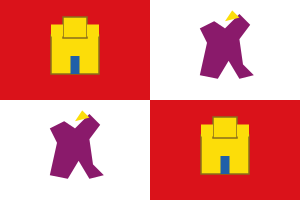 Conquest of Ibiza — the Kingdom of Majorca (from 1276)
no archive holds this yet 1349–1715  Crown of Aragon — Kingdom of Majorca
FamilySearch 1715–1871 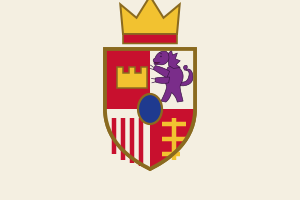 Kingdom of Spain — Nueva Planta (Balearic province from 1833)
FamilySearch 1871–1931 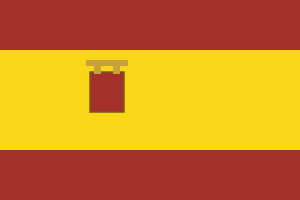 Kingdom of Spain
PARES · FamilySearch 1931–1936 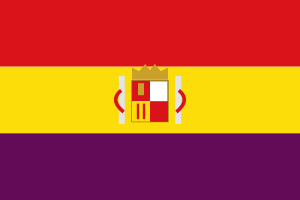 Second Spanish Republic
PARES · FamilySearch 1936–1975 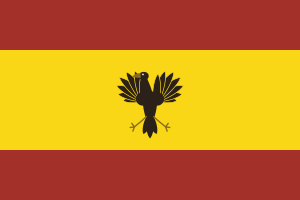 Francoist Spain — the Nationalist zone, after a Republican interlude
PARES · FamilySearch 1975–2026  Kingdom of Spain — Balearic Islands autonomous community
PARES · FamilySearch Do this: take the year you are looking for, find its row, and note the archive. That is the one to search — not the one the village is in today.
-
The things that catch people out here
1715–1871, Kingdom of Spain — Nueva Planta (Balearic province from 1833). The diocesan archive's index of sacramental books for Eivissa and Formentera says the books it does not list were destroyed in 1936; later ones are in the parishes. Listed baptism books begin in 1784 (Sant Antoni) and 1786 (Santa Agnès); for Sant Josep they begin only in 1888, and Formentera's Pilar parish lists baptisms from 1856 and deaths from 1784. Parish registers are the record until civil registration in 1871.
-
When you run out — and you will
Everything above is what this atlas knows. It is not everything there is. Nine places in ten on this map have never been surveyed by anybody, so a gap here is usually our silence rather than the record's absence.
Do this: write to the archive named in the era table for your year, even if we hold nothing for it. Then tell us what you found — a gap somebody has personally closed is the most useful thing a stranger can give this map.
The archives named above: FamilySearch · PARES. What each one holds and why.
How this place is on the map:
Whose archive this ground was
Sant Josep de sa Talaia sits in Ibiza and Formentera (the Pitiusas). Which empire held it decides which archive holds its records — and for some of these years that is not the archive you would guess.
| Years | Who held it | Whose archive that means |
|---|---|---|
| 1235–1349 | Conquest of Ibiza — the Kingdom of Majorca (from 1276) | no registers survive Before registers. Ibiza fell in 1235; the Kingdom of Majorca created in 1276 included Ibiza and Formentera. It passed to the Crown of Aragon in 1344 or 1349 depending on the source. |
| 1349–1715 | Crown of Aragon — Kingdom of Majorca | FamilySearch The Kingdom of Majorca remained separate, with its own viceroy, until the Nueva Planta decree of 1715. |
| 1715–1871 | Kingdom of Spain — Nueva Planta (Balearic province from 1833) | FamilySearch The diocesan archive's index of sacramental books for Eivissa and Formentera says the books it does not list were destroyed in 1936; later ones are in the parishes. Listed baptism books begin in 1784 (Sant Antoni) and 1786 (Santa Agnès); for Sant Josep they begin only in 1888, and Formentera's Pilar parish lists baptisms from 1856 and deaths from 1784. Parish registers are the record until civil registration in 1871. |
| 1871–1931 | Kingdom of Spain | PARES · FamilySearch Civil registration begins in 1871 under the law of 17 June 1870, though some municipalities have records from as early as 1837. The registers stay in each municipality's local archive; certified copies come from the Ministerio de Justicia or the local Juzgado de Paz / Oficina del Registro Civil. |
| 1931–1936 | Second Spanish Republic | PARES · FamilySearch The Republic was proclaimed on 14 April 1931. |
| 1936–1975 | Francoist Spain — the Nationalist zone, after a Republican interlude | PARES · FamilySearch Republican forces recaptured Ibiza early in the war and the Nationalists retook it in September 1936. Sources conflict on whether Formentera stayed loyal to the Republic. Under Franco's State. |
| 1975–2026 | Kingdom of Spain — Balearic Islands autonomous community | PARES · FamilySearch The islands gained self-government under their first Statute of Autonomy in 1983. |
229 volumes, the first 25 listed
Grouped by what it costs to look, most open first, which is the order worth trying them in. The film number and denomination are from FamilySearch's own catalogue. Nobody here has opened any of them. You can, though: mark the pages you have searched on any row and this browser will remember where you stopped.
- Bautismos 1533-1604 (incluye confirmaciones) ↗ 1533–1604
- Bautismos 1604-1648 (incluye confirmaciones) ↗ 1604–1648
- Bautismos, Documentos Parroquiales 1723-1754 ↗ 1723–1754
- Defunciones 1723-1786 ↗ 1723–1786
- Defunciones 1723-1803 ↗ 1723–1803
- Índice de Bautismos 1723-1895 ↗ 1723–1895
- Índice de Defunciones 1723-1858 ↗ 1723–1858
- Matrimonios 1723-1785 ↗ 1723–1785
- Bautismos 1754-1768 ↗ 1754–1768
- Bautismos 1768-1781 ↗ 1768–1781
- Bautismos, Documentos Parroquiales 1781-1796 ↗ 1781–1796
- Defunciones 1783-1843 ↗ 1783–1843
- Matrimonios 1784-1843 ↗ 1784–1843
- Bautismos 1785-1809 (incluye confirmaciones) ↗ 1785–1809
- Confirmaciones 1786-1848 ↗ 1786–1848
- Defunciones 1787-1848 ↗ 1787–1848
- Bautismos 1790-1797 ↗ 1790–1797
- Defunciones 1790-1811 ↗ 1790–1811
- Matrimonios 1790-1814 ↗ 1790–1814
- Índice de Bautismos 1791-1902 ↗ 1791–1902
- Bautismos 1791-1836 ↗ 1791–1836
- Defunciones 1791-1854 ↗ 1791–1854
- Matrimonios 1792-1854 ↗ 1792–1854
- Bautismos 1792-1802 ↗ 1792–1802
- Bautismos 1792-1817 ↗ 1792–1817
The ground worth walking
Within 25 km — 2 places. These neighbours hold 13 catalogued volumes between them.
A register belongs to a parish, not to a village. A hamlet with no church of its own was written into the book of the church it walked to — and that book is catalogued under the other place's name. This is the ground to search before concluding a record does not exist.
- Sant Antoni de Portmany6.5 km13 volumes
Correctly placed and unread. A gap here is this atlas's silence, not the record's — the registers may well exist and nobody has walked them.
The sources for Spain
National and regional sources that cover this ground whether or not anybody has walked it here — which makes them the answer, not the consolation, for a place with no volumes recorded on it. A country-wide body is listed whatever the distance; a provincial archive is a claim over its own province, so those are the nearest ones. 99 more cover Spain and are on the country sources page.
- PARES Images, free, no account Madrid, Spain
The Spanish archives portal — strongest on emigration to the Americas and on military and colonial service. - Registro Civil — Ministerio de Justicia (birth, marriage and death certificates) Images, free, no account
Ministry of Justice page on the Spanish civil register, which records births, marriages and deaths. It says certificates can be obtained in person at the relevant Registro Civil office or online through the ministry's electronic headquarters. - Centro Documental de la Memoria Histórica (CDMH), Salamanca An index only — no images Salamanca, Castilla y León, Spain
Spanish state archive in Salamanca for the Civil War and the Francoist repression, run by the Ministry of Culture. Its page lists person-level online databases: Republican military personnel of sub-officer rank or above and members of the public-order forces and Carabineros, missing Republican army personnel, and… - Archivo Histórico Nacional (AHN), Madrid — Spanish National Historical Archive On paper, in the building Madrid, Spain
The Ministry of Culture's own page for the national historical archive in Madrid. It names series such as the nobility titles and grandezas, Directorate-General of Security police files and information bulletins, the Cardenal Cisneros institute's student records, the Ensenada cadastre books (a project in progress) and… - Archivo General de la Administración (AGA), Alcalá de Henares On paper, in the building Alcalá de Henares, Madrid, Spain
State archive of the Spanish administration at Alcalá de Henares, run by the Ministry of Culture. The page lists purge (depuración) files, censorship files, prison documentation, records of the Consejo Supremo de Justicia Militar, the Junta para Ampliación de Estudios, Madrid provincial finance (cadastre) records and… - Archivo General de Indias (AGI), Sevilla On paper, in the building Sevilla, Andalucía, Spain
The Ministry of Culture's page for the archive of the Spanish empire's Atlantic and Pacific administration, housed in two buildings in Seville (the Lonja and the Cilla). - Archivo General de Simancas (AGS) On paper, in the building Simancas, Valladolid, Spain
The Ministry of Culture's page for the archive of the Crown of Castile's central councils at Simancas, near Valladolid. Series named on the page include the Consejo de Guerra for the reigns of Charles I and Philip II, the Registro General del Sello (1454-1501), the Patronato Real and parts of the Secretaría de Guerra,… - Archivo de la Corona de Aragón (ACA), Barcelona On paper, in the building Barcelona, Catalonia, Spain
State archive in the Palacio de los Virreyes in Barcelona, founded in 1318 and holding the royal chancery registers as its core. The page highlights medieval documents (the Llibre del Repartiment de València, the Liber feudorum maior), a fund of the Servicio de Defensa del Patrimonio Artístico Nacional (1938-1960),… - Archivo de la Real Chancillería de Valladolid (ARCV) On paper, in the building Valladolid, Castilla y León, Spain
Ministry of Culture archive of the Real Audiencia y Chancillería de Valladolid (1371-1834), the highest royal court for Castile north of the Tagus, plus its successor the Audiencia Territorial (1834-1988) and other court records still being transferred. - Sociedad Iberoamericana de Genealogía e Historia (SIGEH) Nobody has walked this one yet
Society of genealogists and historians working in Spain, Ibero-America and the Philippines. The site lists talk archives for 2021-2026, the journal Revista Linajes, a genealogy school and courses. It does not describe any searchable indexes. - Arquivos de Galicia (Xunta de Galicia archive system portal) Nobody has walked this one yet
Portal of the Galician archive system run by the Xunta de Galicia. It names the Arquivo do Reino de Galicia and the historical provincial archives of Lugo, Ourense and Pontevedra, and links to the Arquivo dixital de Galicia and the Censo de Arquivos de Galicia. - Geneanet Partly free, partly paid
Member-contributed trees and transcriptions, strongest in France. Much is free; a Premium tier gates some search and images. - DARA — Documentos y Archivos de Aragón A catalogue entry only — the paper is not photographed
Gobierno de Aragón portal with a search across 112 archives at every description level. It covers medieval documents (833-1516), the Aragonese foral period (1516-1700) and the Republic, Civil War and Francoist period (1931-1977). - Portal de Archivos de Andalucía (Junta de Andalucía) A catalogue entry only — the paper is not photographed
Junta de Andalucía portal to the region's archives. Its menus list the Archivo General de Andalucía, the Archivos Históricos Provinciales for Almería, Cádiz, Córdoba, Granada, Huelva, Jaén, Málaga and Sevilla, the Archivo de la Real Chancillería de Granada and the Archivo del Patronato de la Alhambra y el Generalife. - Archivos de Castilla y León (Junta de Castilla y León) A catalogue entry only — the paper is not photographed
Portal of the regional archive network of Castilla y León. It names the Archivo General de Castilla y León, the Archivos Históricos Provinciales, central and territorial archives and a directory of archives. It offers the SIEGA online catalogue, a documentary holdings search, virtual exhibitions and open data.
Sources for Spain
the national archive and library from Wikidata, and the 49 services that cover every country — FamilySearch, Ancestry, MyHeritage, Geneanet, Find a Grave and the rest — are the same for every place in Spain, so they are listed once: all the sources for Spain.
FamilySearch collections that reach here
A collection is a claim over an area, not a book standing in this town — so these are ranked by how specifically they reach Sant Josep de sa Talaia. A free account is needed to open the images, and some are restricted to a Family History Centre.
Worth searching, and worth knowing it is a national index rather than a local one.
- Spain, Catholic Church Records, 1307-2005 ↗ 1306–2005 18,497,566 records 483 km
- Spain, Baptisms, 1502-1940 ↗ 1501–1940 8,167,391 records 483 km
- Spain, Madrid, Municipal Census Records, 1910-1945 ↗ 1910–1945 6,783,329 records 483 km
…and 44 more: every FamilySearch collection for Spain, on the country page.
See who held Sant Josep de sa Talaia between 1800 and 1920 →
The jurisdiction answer — which empire held this ground, and therefore
whose archive — could only be got at from the map until now. This opens it there, on
1863; drag the year from any point between 1235 and
2026.
See Sant Josep de sa Talaia on the map →
Everything in Spain · All 57354 places · Correct something on this page