Santa Cruz is in Portugal today. The atlas holds no record volumes for it yet, which is a gap in the atlas and not a finding about the records. The ground has flown 7 flags.
Last changed 2026-11-21 · first mapped 2026-09-23 Follow what changes.
Comes out as a sheet for the reading room — what to ask for, who holds it, and every link written out in full.
This place
Where to begin
You know your family came from Santa Cruz. Here is the order I would work in, cheapest and easiest first — and what to do when that runs out.
-
Work out which country your year belongs to
This is the step almost everybody skips, and it is the commonest reason a record that exists cannot be found. The ground did not move; the border did. A baptism here in one decade may sit in a different country's archive from one twenty years later.
Years Who governed Whose archive 1419–1497 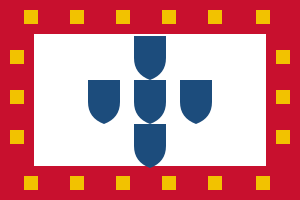 Kingdom of Portugal - Madeira and Porto Santo under donatary captaincies
no archive holds this yet 1497–1580 Kingdom of Portugal - Madeira a crown possessionTorre do Tombo / Digitarq · FamilySearch 1580–1640  Iberian Union - Madeira under Governors General
Torre do Tombo / Digitarq · FamilySearch 1640–1801  Kingdom of Portugal
Torre do Tombo / Digitarq · FamilySearch 1801–1802  British occupation (first)
Torre do Tombo / Digitarq · FamilySearch 1802–1807 Kingdom of PortugalTorre do Tombo / Digitarq · FamilySearch 1807–1814 British occupation (Peninsular War)Torre do Tombo / Digitarq · FamilySearch 1814–1901 Kingdom of PortugalTorre do Tombo / Digitarq · FamilySearch 1901–1910 Kingdom of Portugal - autonomous district of FunchalTorre do Tombo / Digitarq · FamilySearch 1910–1933 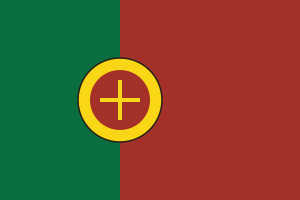 Portuguese Republic (First Republic)
Torre do Tombo / Digitarq · FamilySearch 1933–1974 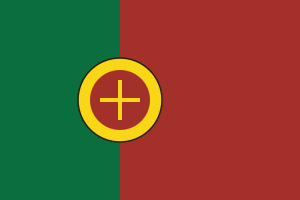 Estado Novo
Torre do Tombo / Digitarq · FamilySearch 1974–1976  Portuguese Republic - the transition to autonomy
Torre do Tombo / Digitarq · FamilySearch 1976–2026 Portuguese Republic - Autonomous Region of MadeiraTorre do Tombo / Digitarq · FamilySearch Do this: take the year you are looking for, find its row, and note the archive. That is the one to search — not the one the village is in today.
-
The things that catch people out here
1814–1901, Kingdom of Portugal. Madeira was an ordinary district of the Kingdom. The regional archive in Funchal publishes parish registers online, but how far back it does so differs from parish to parish; that is the online coverage, not the start of the books, so check its catalogue before concluding a register does not exist.
1901–1910, Kingdom of Portugal - autonomous district of Funchal. The decree of 8 August 1901 established administrative autonomy in the Funchal district, using the powers set out in the decree of 2 March 1895. This was district self-administration inside the Kingdom, not the political autonomy of 1976.
-
When you run out — and you will
Everything above is what this atlas knows. It is not everything there is. Nine places in ten on this map have never been surveyed by anybody, so a gap here is usually our silence rather than the record's absence.
Do this: write to the archive named in the era table for your year, even if we hold nothing for it. Then tell us what you found — a gap somebody has personally closed is the most useful thing a stranger can give this map.
The archives named above: Torre do Tombo / Digitarq · FamilySearch. What each one holds and why.
How this place is on the map:
Whose archive this ground was
Santa Cruz sits in Madeira and Porto Santo. Which empire held it decides which archive holds its records — and for some of these years that is not the archive you would guess.
| Years | Who held it | Whose archive that means |
|---|---|---|
| 1419–1497 | Kingdom of Portugal - Madeira and Porto Santo under donatary captaincies | no registers survive Zarco and Tristão Vaz Teixeira reached Porto Santo in 1418 and, with Bartolomeu Perestrelo, Madeira in 1419; settlement began about 1420 or 1425 (sources differ; one gives c. 1425 under João I or Prince Henry). The archipelago was held by the Order of Christ, and the captaincies were Machico (1440, Tristão Vaz Teixeira), Porto Santo (1446, Bartolomeu Perestrelo) and Funchal (1450, João Gonçalves Zarco); Funchal became a vila in 1451. Before registers. |
| 1497–1580 | Kingdom of Portugal - Madeira a crown possession | Torre do Tombo / Digitarq · FamilySearch A royal charter of 27 April 1497 made Madeira realenga (a crown possession), Funchal was raised to a city in 1508 and to a bishopric in 1514. FamilySearch's catalogue lists the Funchal Sé parish registers from 1538, the earliest date found for a Madeiran parish; the FamilySearch entry describes them as microfilms of manuscripts from the Funchal district archive. |
| 1580–1640 | Iberian Union - Madeira under Governors General | Torre do Tombo / Digitarq · FamilySearch During the union of the crowns the island was run by Governors General, the first being João Leitão. The news of the 1640 Restoration reached Madeira on 29 December 1640. |
| 1640–1801 | Kingdom of Portugal | Torre do Tombo / Digitarq · FamilySearch Madeira was part of the restored Portuguese kingdom. |
| 1801–1802 | British occupation (first) | Torre do Tombo / Digitarq · FamilySearch The British first occupied Madeira 'amicably' on 23 July 1801 (Colonel William Henry Clinton as governor) and withdrew on 27 January 1802, after the Peace of Amiens. |
| 1802–1807 | Kingdom of Portugal | Torre do Tombo / Digitarq · FamilySearch Back under the Portuguese crown between the two British occupations. |
| 1807–1814 | British occupation (Peninsular War) | Torre do Tombo / Digitarq · FamilySearch British forces reoccupied Madeira in 1807. A Treaty of Restitution of 16 March 1808 returned the archipelago to civil administration, while other accounts keep the British on the island until 1814, so the end date is contested. |
| 1814–1901 | Kingdom of Portugal | Torre do Tombo / Digitarq · FamilySearch Madeira was an ordinary district of the Kingdom. The regional archive in Funchal publishes parish registers online, but how far back it does so differs from parish to parish; that is the online coverage, not the start of the books, so check its catalogue before concluding a register does not exist. |
| 1901–1910 | Kingdom of Portugal - autonomous district of Funchal | Torre do Tombo / Digitarq · FamilySearch The decree of 8 August 1901 established administrative autonomy in the Funchal district, using the powers set out in the decree of 2 March 1895. This was district self-administration inside the Kingdom, not the political autonomy of 1976. |
| 1910–1933 | Portuguese Republic (First Republic) | Torre do Tombo / Digitarq · FamilySearch The Republic was proclaimed on 5 October 1910. The Civil Registry Code of 18 February 1911 made civil registration compulsory; genealogy sources give 1 April 1911 as the date the civil register replaced the parish book as the legal record. |
| 1933–1974 | Estado Novo | Torre do Tombo / Digitarq · FamilySearch The Estado Novo ran from 11 April 1933 (constitution approved by referendum on 19 March 1933) to 25 April 1974. |
| 1974–1976 | Portuguese Republic - the transition to autonomy | Torre do Tombo / Digitarq · FamilySearch The Carnation Revolution of 25 April 1974 ended the Estado Novo. The 1976 Constitution granted Madeira an autonomous administration with its own legislature. |
| 1976–2026 | Portuguese Republic - Autonomous Region of Madeira | Torre do Tombo / Digitarq · FamilySearch Political autonomy was granted in 1976, dated 1 July 1976 (Madeira Day) or 30 April 1976 depending on the source. |
No volumes recorded here yet.
The ground worth walking
Within 15 km — 8 places.
A register belongs to a parish, not to a village. A hamlet with no church of its own was written into the book of the church it walked to — and that book is catalogued under the other place's name. This is the ground to search before concluding a record does not exist.
Correctly placed and unread. A gap here is this atlas's silence, not the record's — the registers may well exist and nobody has walked them.
The sources for Portugal
National and regional sources that cover this ground whether or not anybody has walked it here — which makes them the answer, not the consolation, for a place with no volumes recorded on it. A country-wide body is listed whatever the distance; a provincial archive is a claim over its own province, so those are the nearest ones. 15 more cover Portugal and are on the country sources page.
- Torre do Tombo / Digitarq Images, free, no account Lisbon, Portugal
The Portuguese national archive's scans, free. District archives publish parish registers through the same system. - Arquivo Nacional da Torre do Tombo Images, free, no account Lisbon, Portugal
Portugal's national archive, housed in its own building at the Alameda da Universidade, Lisbon, and run by DGLAB. When read (Nov 2026) the site showed a maintenance notice after a security problem, with only contacts, reading-room reservation (CRAV) and the DigitArq portal available, so it did not describe its… - Centro Português de Fotografia A catalogue entry only — the paper is not photographed Porto, Portugal
Portuguese national photography centre in the former prison and appeal court in Porto, part of DGLAB. Its pages list a national photography collection, a collection of cameras and equipment, bibliographic holdings and acquisitions. - Arquivo Histórico da Marinha (Biblioteca Central de Marinha) A catalogue entry only — the paper is not photographed
Holds records of the Portuguese Navy covering about 277 years, including personnel, ships, organisations and legislation. The Biblioteca Central de Marinha page lists codices, loose documents, photographs, maps and ship plans, subjects including emigration, and private archives donated by naval personnel and families. - Instituto Diplomático — Arquivo e Biblioteca (Ministério dos Negócios Estrangeiros) A catalogue entry only — the paper is not photographed
Archive and library of the Portuguese foreign ministry's diplomatic institute. The reading-room page links an online catalogue and a section on personal archives, and highlights documents on Aristides de Sousa Mendes and on the two World Wars. - DIGIGOV — Diário do Governo (CEPESE) Images, free, no account
Digitised issues of the Portuguese official gazette, the Diário do Governo, close to 30,000 issues including supplements and extraordinary editions. Coverage runs from 16 September 1820 to 5 October 1910. - Hemeroteca Digital do Algarve (Universidade do Algarve) A catalogue entry only — the paper is not photographed
A collection of 316 periodical titles (newspapers, magazines, bulletins, almanacs) published in the Algarve from 1810. The digital collection can be searched by title, author, year and place, with full-text search; the physical collection is at the Biblioteca da Universidade do Algarve, Campus de Gambelas, Faro. - Casa de Sarmento — Centro de Estudos do Património (Universidade do Minho) A catalogue entry only — the paper is not photographed
Heritage studies centre in Guimarães, a unit of the University of Minho set up in 2017. Its collections include the Sociedade Martins Sarmento archive, a genealogical repository, the ArchivAVE collection, a postcard collection, and a digital newspaper library; - Arquivo Genealógico da Lourinhã Images, free, no account
A genealogy website for Lourinhã whose menu has sections for baptisms, marriages, deaths, military service, higher education and passport applications, plus about 22 family pages. The home page gives no coverage dates or access terms; its copyright notice reads 2022 and the contact is by email. - Genealogia do Algarve Images, free, account needed
A genealogy portal that aims to publish the family relationships of people born, married, lived or died in the Algarve. It is sponsored by the municipalities of Portimão, Albufeira, Lagoa and Monchique and ISMAT. - Sociedade Genealógica de São Jorge (SJGS) Partly free, partly paid
A genealogy society focused on the island of São Jorge in the Azores. Its site offers a searchable collections catalogue, digital databases and records, volunteer indexing projects, lookup and copy services, and links to Azores GenWeb and Tombo São Jorge. The page says its Sharefile system needs an annual membership; - Geneall.net — Portal de Genealogia Nobody has walked this one yet
A long-running Portuguese genealogy portal. Its home page, dated the day before I opened it, shows counts of 178,235 families, 5,172,206 people and 648,169 descendants of King Afonso Henriques. - Tombo.pt — registos paroquiais portugueses para genealogia Nobody has walked this one yet
A genealogy site (running since 2013) that organises parish books and civil registry information by Portuguese district, the Azores and Madeira, with notes on recent additions such as new parish books from the Porto district archive.
Sources for Portugal
the national archive and library from Wikidata, and the 49 services that cover every country — FamilySearch, Ancestry, MyHeritage, Geneanet, Find a Grave and the rest — are the same for every place in Portugal, so they are listed once: all the sources for Portugal.
FamilySearch collections that reach here
A collection is a claim over an area, not a book standing in this town — so these are ranked by how specifically they reach Santa Cruz. A free account is needed to open the images, and some are restricted to a Family History Centre.
Worth searching, and worth knowing it is a national index rather than a local one.
- Portugal, Lisbon, Catholic Church Records, 1334-1998 ↗ 1334–1998 3,120,218 records 1115 km
- Portugal, Coimbra, Catholic Church Records, 1459-1999 ↗ 1458–1999 2,016,191 records 1115 km
- Portugal, Viseu, Catholic Church Records, 1523-1989 ↗ 1522–1989 1,590,363 records 1115 km
…and 36 more: every FamilySearch collection for Portugal, on the country page.
See who held Santa Cruz between 1800 and 1920 →
The jurisdiction answer — which empire held this ground, and therefore
whose archive — could only be got at from the map until now. This opens it there, on
1863; drag the year from any point between 1419 and
2026.
Everything in Portugal · All 57354 places · Correct something on this page