Opština Kolašin in Opština Kolašin, Montenegro. 0 record volumes and who holds them.
Opština Kolašin is in Montenegro today. The atlas holds no record volumes for it yet, which is a gap in the atlas and not a finding about the records. The ground has flown 3 flags.
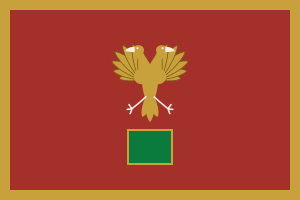
Nothing here has changed since this page began being watched on 2026-09-23. Follow what changes.
Comes out as a sheet for the reading room — what to ask for, who holds it, and every link written out in full.
This is a region, not a town — the marker sits at its centre, not at a building. Records filed at this level are usually held for the whole region.
This place
Where to begin
You know your family came from Opština Kolašin. Here is the order I would work in, cheapest and easiest first — and what to do when that runs out.
-
Work out which country your year belongs to
This is the step almost everybody skips, and it is the commonest reason a record that exists cannot be found. The ground did not move; the border did. A baptism here in one decade may sit in a different country's archive from one twenty years later.
Years Who governed Whose archive 1516–1852 Prince-Bishopric of Montenegro at Cetinje Prime Ministry Republic Archives · FamilySearch 1852–1878 Principality of Montenegro Prime Ministry Republic Archives · FamilySearch 1878–1918 Principality, from 28 August 1910 the Kingdom of Montenegro FamilySearch 1918–1941  Kingdom of Serbs, Croats and Slovenes, then Yugoslavia
FamilySearch 1941–1944  Italian occupation and puppet Kingdom of Montenegro, German occupation from 1943
Arolsen Archives · FamilySearch 1944–2006  Yugoslavia: Republic of Montenegro
FamilySearch 2006–2026 Montenegro FamilySearch Do this: take the year you are looking for, find its row, and note the archive. That is the one to search — not the one the village is in today.
-
When you run out — and you will
Everything above is what this atlas knows. It is not everything there is. Nine places in ten on this map have never been surveyed by anybody, so a gap here is usually our silence rather than the record's absence.
Do this: write to the archive named in the era table for your year, even if we hold nothing for it. Then tell us what you found — a gap somebody has personally closed is the most useful thing a stranger can give this map.
The archives named above: Prime Ministry Republic Archives · FamilySearch · Arolsen Archives. What each one holds and why.
How this place is on the map: listed from GeoNames as an administrative area so that a name can be found. No registers have been walked here.
Whose archive this ground was
Opština Kolašin sits in Cetinje, Podgorica and the Zeta plain, Bar and Ulcinj. Which empire held it decides which archive holds its records — and for some of these years that is not the archive you would guess.
| Years | Who held it | Whose archive that means |
|---|---|---|
| 1516–1852 | Prince-Bishopric of Montenegro at Cetinje | Prime Ministry Republic Archives · FamilySearch The prince-bishopric dates from 1516, as an Ottoman vassal until 1697 and independent from 1697 under the Petrović-Njegoš family; the Brda, including the Bjelopavlići and Piperi, joined in 1796. Podgorica, Nikšić, Bar and Ulcinj lay outside it under the Ottomans (Ulcinj from 1571 after Venetian rule). |
| 1852–1878 | Principality of Montenegro | Prime Ministry Republic Archives · FamilySearch On 13 March 1852 Prince-Bishop Danilo II gave up his church office and became Prince Danilo I, secularising the state. Bar, Podgorica, Spuž and Žabljak were still Ottoman, in the Vilayet of Scutari formed in 1867. |
| 1878–1918 | Principality, from 28 August 1910 the Kingdom of Montenegro | FamilySearch The 1878 settlement raised Montenegro's area from 4,405 to 9,475 km2 and added Nikšić, Kolašin, Spuž, Podgorica, Žabljak and Bar. Ulcinj followed after the naval demonstration of 1880 (some sources date its transfer to 1878 or 1881). The Central Powers occupied Montenegro after the 1916 invasion. |
| 1918–1941 | Kingdom of Serbs, Croats and Slovenes, then Yugoslavia | FamilySearch The Podgorica Assembly voted for union with Serbia, effective 1 December 1918. In 1922 the area became the Zeta region with Cetinje as its administrative seat, and in 1929 the Zeta Banovina. |
| 1941–1944 | Italian occupation and puppet Kingdom of Montenegro, German occupation from 1943 | Arolsen Archives · FamilySearch Italy occupied Montenegro in 1941 and Germany replaced it in 1943. Ulcinj was under Albanian administration from 1941 to 1944. Partisans entered Podgorica on 19 December 1944. |
| 1944–2006 | Yugoslavia: Republic of Montenegro | FamilySearch Podgorica was renamed Titograd in 1947 and replaced Cetinje as the capital. |
| 2006–2026 | Montenegro | FamilySearch |
No volumes recorded here yet.
The ground worth walking
Within 25 km — 2 places.
A register belongs to a parish, not to a village. A hamlet with no church of its own was written into the book of the church it walked to — and that book is catalogued under the other place's name. This is the ground to search before concluding a record does not exist.
Correctly placed and unread. A gap here is this atlas's silence, not the record's — the registers may well exist and nobody has walked them.
Sources for Montenegro
The national and regional archives that cover Montenegro, the national archive and library from Wikidata, and the 49 services that cover every country — FamilySearch, Ancestry, MyHeritage, Geneanet, Find a Grave and the rest — are the same for every place in Montenegro, so they are listed once: all the sources for Montenegro.
See who held Opština Kolašin between 1800 and 1920 →
The jurisdiction answer — which empire held this ground, and therefore
whose archive — could only be got at from the map until now. This opens it there, on
1863; drag the year from any point between 1516 and
2026.
See Opština Kolašin on the map →
Everything in Montenegro · All 57354 places · Correct something on this page