Serpneve (Leipzig) in Ukraine. 0 record volumes and who holds them.
Serpneve (Leipzig) is in Ukraine today. The atlas holds no record volumes for it yet, which is a gap in the atlas and not a finding about the records. The ground has flown 5 flags.

Nothing here has changed since this page began being watched on 2026-11-21. Follow what changes.
Comes out as a sheet for the reading room — what to ask for, who holds it, and every link written out in full.
This place
Where to begin
You know your family came from Serpneve (Leipzig). Here is the order I would work in, cheapest and easiest first — and what to do when that runs out.
-
Work out which country your year belongs to
This is the step almost everybody skips, and it is the commonest reason a record that exists cannot be found. The ground did not move; the border did. A baptism here in one decade may sit in a different country's archive from one twenty years later.
Years Who governed Whose archive 1500–1812 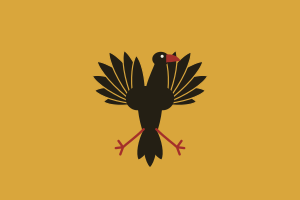 Moldavia under Ottoman suzerainty
no archive holds this yet 1812–1856  Russian Empire - Bessarabia Oblast
Agenția Națională a Arhivelor (Moldova) · FamilySearch 1856–1878 Russia, with southern Bessarabia returned to MoldaviaAgenția Națională a Arhivelor (Moldova) · Arhivele Naționale ale României 1878–1918 Russian Empire - Bessarabia GovernorateAgenția Națională a Arhivelor (Moldova) · Arhivele Naționale ale României · FamilySearch · JewishGen 1918–1940  Romania (Moldavian Democratic Republic, 1918)
Arhivele Naționale ale României · Agenția Națională a Arhivelor (Moldova) 1940–1941  Soviet annexation
no archive holds this yet 1941–1944  Romania - reconquered 1941, with Transnistria across the Dniester
Arhivele Naționale ale României · Yad Vashem — Central Database of Shoah Victims' Names · Arolsen Archives 1944–1991 Soviet Union - Moldavian SSR, and Ukrainian SSR (north and south)Agenția Națională a Arhivelor (Moldova) · FamilySearch 1991–2026 Moldova; Ukraine (Khotyn and Budjak); Transnistria unrecognised Agenția Națională a Arhivelor (Moldova) · Arhivele Naționale ale României · FamilySearch Do this: take the year you are looking for, find its row, and note the archive. That is the one to search — not the one the village is in today.
-
The things that catch people out here
1856–1878, Russia, with southern Bessarabia returned to Moldavia. THE TRAP. The Treaty of Paris (1856) returned southern Bessarabia to Moldavia after the Crimean War, so for these years Cahul and Izmail records are Moldavian, not Russian. Russian rule was restored over the whole region in 1878.
1941–1944, Romania - reconquered 1941, with Transnistria across the Dniester. Romania recaptured the region in 1941 and lost it in 1944. A Transnistria Governorate lay across the Dniester.
-
When you run out — and you will
Everything above is what this atlas knows. It is not everything there is. Nine places in ten on this map have never been surveyed by anybody, so a gap here is usually our silence rather than the record's absence.
Do this: write to the archive named in the era table for your year, even if we hold nothing for it. Then tell us what you found — a gap somebody has personally closed is the most useful thing a stranger can give this map.
The archives named above: Agenția Națională a Arhivelor (Moldova) · FamilySearch · Arhivele Naționale ale României · JewishGen · Yad Vashem — Central Database of Shoah Victims' Names · Arolsen Archives. What each one holds and why.
How this place is on the map:
Whose archive this ground was
Serpneve (Leipzig) sits in Bessarabia and the Dniester. Which empire held it decides which archive holds its records — and for some of these years that is not the archive you would guess.
| Years | Who held it | Whose archive that means |
|---|---|---|
| 1500–1812 | Moldavia under Ottoman suzerainty | no registers survive Before registers. The Ottomans ruled Khotyn directly. |
| 1812–1856 | Russian Empire - Bessarabia Oblast | Agenția Națională a Arhivelor (Moldova) · FamilySearch The Treaty of Bucharest, signed 28 May 1812, ceded the land between the Prut and the Dniester to Russia. Bessarabia became an oblast in 1818, and the Novorossiysk-Bessarabia General Government sat at Odesa from 1822 to 1873. |
| 1856–1878 | Russia, with southern Bessarabia returned to Moldavia | Agenția Națională a Arhivelor (Moldova) · Arhivele Naționale ale României THE TRAP. The Treaty of Paris (1856) returned southern Bessarabia to Moldavia after the Crimean War, so for these years Cahul and Izmail records are Moldavian, not Russian. Russian rule was restored over the whole region in 1878. |
| 1878–1918 | Russian Empire - Bessarabia Governorate | Agenția Națională a Arhivelor (Moldova) · Arhivele Naționale ale României · FamilySearch · JewishGen Bessarabia became a governorate (guberniya) in 1873. |
| 1918–1940 | Romania (Moldavian Democratic Republic, 1918) | Arhivele Naționale ale României · Agenția Națională a Arhivelor (Moldova) Sfatul Tarii declared independence on 6 February 1918 (24 January old style) and voted for union with Romania on 9 April 1918 (27 March old style). The Moldavian ASSR lay across the Dniester within Soviet Ukraine from 1922 to 1940. |
| 1940–1941 | Soviet annexation | no registers survive Romania withdrew under Soviet pressure in 1940. The core joined parts of the Moldavian ASSR to form the Moldavian SSR, while northern and southern districts (including the Khotyn and Budjak areas) went to the Ukrainian SSR. |
| 1941–1944 | Romania - reconquered 1941, with Transnistria across the Dniester | Arhivele Naționale ale României · Yad Vashem — Central Database of Shoah Victims' Names · Arolsen Archives Romania recaptured the region in 1941 and lost it in 1944. A Transnistria Governorate lay across the Dniester. |
| 1944–1991 | Soviet Union - Moldavian SSR, and Ukrainian SSR (north and south) | Agenția Națională a Arhivelor (Moldova) · FamilySearch |
| 1991–2026 | Moldova; Ukraine (Khotyn and Budjak); Transnistria unrecognised | Agenția Națională a Arhivelor (Moldova) · Arhivele Naționale ale României · FamilySearch The Moldavian and Ukrainian SSRs proclaimed independence in 1991. A Pridnestrovian Moldavian Republic was proclaimed in Transnistria after a short war in the early 1990s, so records from the left bank may sit outside the national archive. |
No volumes recorded here yet.
The ground worth walking
Within 18 km — 10 places. These neighbours hold 39 catalogued volumes between them.
A register belongs to a parish, not to a village. A hamlet with no church of its own was written into the book of the church it walked to — and that book is catalogued under the other place's name. This is the ground to search before concluding a record does not exist.
- Chiriet-Lunga12.0 km12 volumes
- Avdarma15.3 km1 volume
- Tvardița17.7 km18 volumes
- Joltai18.0 km8 volumes
Correctly placed and unread. A gap here is this atlas's silence, not the record's — the registers may well exist and nobody has walked them.
The sources for Ukraine
National and regional sources that cover this ground whether or not anybody has walked it here — which makes them the answer, not the consolation, for a place with no volumes recorded on it. A country-wide body is listed whatever the distance; a provincial archive is a claim over its own province, so those are the nearest ones. 9 more cover Ukraine and are on the country sources page.
- Kriegsarchiv — Österreichisches Staatsarchiv Nobody has walked this one yet Vienna, Austria
The Kriegsarchiv (Vienna) holds Austro-Hungarian military records. For soldiers who died 1914-1918 the Kriegsarchiv's own research page names: the printed casualty lists (digital copies at the Upper Austrian State Library, and the 'Nachrichten über Verwundete und Kranke' in the Czech Digital Library; - National Museum of the Holodomor-Genocide Nobody has walked this one yet Kyiv, Ukraine
Museum in Kyiv. The English home page links to a Book of Remembrance, a Martyrology on victimsholodomor.org.ua, a Register of Burial Sites on an external map (map.memorialholodomor.org.ua) and survivor testimonies, and has a form for families to send memories and photographs. - Hungaricana Images, free, no account Budapest, Hungary
The Hungarian cultural heritage portal — maps, censuses, urbaria and archival finding aids for the whole Kingdom of Hungary, not today's borders. - Szukaj w Archiwach Images, free, no account Warsaw, Poland
The Polish state archives' scans, free and without an account. Covers ground now in Ukraine, Belarus and Lithuania as well as Poland. *** BUT IT IS BOT-GATED AND A SCRIPT CANNOT READ IT. - Rossiyskiy gosudarstvennyy istoricheskiy arkhiv (Russian State Historical Archive, RGIA) Images, free, account needed St Petersburg, Russia
St Petersburg archive of Russian Empire central institutions. The site has a searchable catalogue of fonds, inventories, files and sheets with a filter for files that have scanned sheets, and indexes by personal name, geography, subject and topography, plus a reference library catalogue, virtual exhibitions and video… - Archiwum Główne Akt Dawnych (AGAD) A catalogue entry only — the paper is not photographed Warsaw, Poland
Warsaw's archive of the old Republic — the metrical books of the Polish partitions, including eastern Galician parishes now in Ukraine. Catalogued here; the scans are published through Szukaj w Archiwach. - Magyar Nemzeti Levéltár (Hungarian National Archives) A catalogue entry only — the paper is not photographed Budapest, Hungary
The archives of the Kingdom of Hungary, which until 1920 meant Slovakia, Transylvania, the Banat and Croatia as well. Civil registration duplicates from 1895 are here even where the ground is now in another country. - Germans from Russia Heritage Collection (North Dakota State University) Nobody has walked this one yet Fargo, North Dakota, USA
University library collection on Germans from Russia, in Fargo. The page lists photograph collections, oral histories and exhibits, search tools (finding aids, library catalogue, Digital Horizons) and research areas for genealogy, the history of Germans from Russia including villages, maps and Volga German history,… - Centropa Images, free, no account
An archive of Jewish family memory from Central and Eastern Europe. The home page states 1,230 interviews conducted in 15 European countries and about 25,000 family photographs, with a further Sephardic set for the Balkans and Turkey. - Verein für Computergenealogie — Verlustlisten (des.genealogy.net) Nobody has walked this one yet Vienna, Austria
Volunteer-transcribed databases of the printed First World War casualty lists, run by the Verein für Computergenealogie on its Data Entry System. One project covers the Austro-Hungarian Verlustlisten, built with the Austrian association Familia Austria (search fields: surname, first name, officer or enlisted, rank,… - Gesher Galicia (Jewish research on Galicia, Poland and Ukraine) Nobody has walked this one yet
Non-profit for Jewish genealogical and historical research on Galicia, the former Austro-Hungarian province now split between south-east Poland and western Ukraine. - Rid (pra.in.ua) - Baza danykh meshkantsiv Ukrainy 1650-1920 (database of Ukrainian residents, genealogical society Ridni) Nobody has walked this one yet
Volunteer genealogy database from the society Ridni, running since 2016, listing about 3.9 million people born between 1650 and 1920 and about 446,000 family trees on the day read. Volunteers index scans and photocopies of documents posted on the site and add the people they find. - AGoFF - Arbeitsgemeinschaft ostdeutscher Familienforscher Nobody has walked this one yet
A society of more than 800 members worldwide researching families and regional history in the historic German settlement areas of central and eastern Europe. Its front page notes a finding aid for the NSDAP membership file held by the US National Archives, an index of East Prussian civilians deported by Russian forces… - GenTeam.at Images, free, account needed Vienna, Austria
Volunteer indexes to the Habsburg lands — Vienna's parish registers, Jewish records, school and guild lists. Free with an account, and it reaches ground the church portals do not. - Open List (Открытый список) An index only — no images
Community wiki-style database of people repressed for political reasons in the USSR, 1917-1991. The page reports 3,380,986 person records when read. Search is by surname, first name, patronymic, birth and death dates and place of residence, with * as a placeholder for an unknown name. - Polish Genealogical Society of America (PGSA) Partly free, partly paid
US society for Polish family history. The home page links surname databases for the USA, Poland, Lithuania, Ukraine, Russia and Belarus, plus sections on research sources, education, research services and downloads of the Rodziny journal.
Sources for Ukraine
the national archive and library from Wikidata, and the 49 services that cover every country — FamilySearch, Ancestry, MyHeritage, Geneanet, Find a Grave and the rest — are the same for every place in Ukraine, so they are listed once: all the sources for Ukraine.
FamilySearch collections that reach here
A collection is a claim over an area, not a book standing in this town — so these are ranked by how specifically they reach Serpneve (Leipzig). A free account is needed to open the images, and some are restricted to a Family History Centre.
Worth searching, and worth knowing it is a national index rather than a local one.
- Ukraine, Chernigov Church Records, 1717-1935 ↗ 1717–1935 8,238,342 records 374 km
- Ukraine, Kharkiv Church Records, 1710-1938 ↗ 1710–1938 7,266,101 records 374 km
- Ukraine, Cherkasy, Church Books, 1734-1930 ↗ 1734–1930 5,187,428 records 374 km
…and 37 more: every FamilySearch collection for Ukraine, on the country page.
See who held Serpneve (Leipzig) between 1800 and 1920 →
The jurisdiction answer — which empire held this ground, and therefore
whose archive — could only be got at from the map until now. This opens it there, on
1863; drag the year from any point between 1500 and
2026.
See Serpneve (Leipzig) on the map →
Everything in Ukraine · All 57354 places · Correct something on this page