Pichincha in Pichincha, Ecuador. 0 record volumes and who holds them.
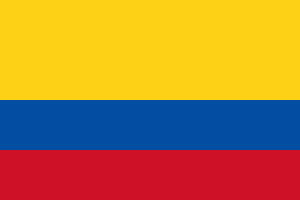
Pichincha is in Ecuador today. The atlas holds no record volumes for it yet, which is a gap in the atlas and not a finding about the records. The ground has flown 3 flags.
Nothing here has changed since this page began being watched on 2026-09-23. Follow what changes.
Comes out as a sheet for the reading room — what to ask for, who holds it, and every link written out in full.
This is a region, not a town — the marker sits at its centre, not at a building. Records filed at this level are usually held for the whole region.
This place
Where to begin
You know your family came from Pichincha. Here is the order I would work in, cheapest and easiest first — and what to do when that runs out.
-
Work out which country your year belongs to
This is the step almost everybody skips, and it is the commonest reason a record that exists cannot be found. The ground did not move; the border did. A baptism here in one decade may sit in a different country's archive from one twenty years later.
Years Who governed Whose archive 1534–1563  Spanish Empire — Viceroyalty of Peru (Quito and Guayaquil)
PARES · FamilySearch 1563–1717 Spanish Empire — Audiencia of Quito, Viceroyalty of PeruPARES · FamilySearch 1717–1809 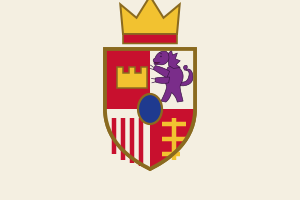 Spanish Empire — Viceroyalty of New Granada, Audiencia of Quito
PARES · FamilySearch 1809–1822 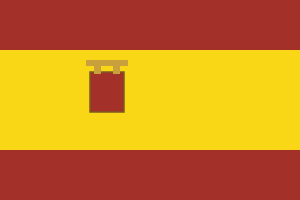 Contested — Quito junta (1809), Guayaquil independent (1820), liberation (1822)
FamilySearch 1822–1830 Gran Colombia — the former Audiencia of Quito FamilySearch 1830–1900 Republic of Ecuador FamilySearch 1900–2026 Republic of Ecuador FamilySearch Do this: take the year you are looking for, find its row, and note the archive. That is the one to search — not the one the village is in today.
-
When you run out — and you will
Everything above is what this atlas knows. It is not everything there is. Nine places in ten on this map have never been surveyed by anybody, so a gap here is usually our silence rather than the record's absence.
Do this: write to the archive named in the era table for your year, even if we hold nothing for it. Then tell us what you found — a gap somebody has personally closed is the most useful thing a stranger can give this map.
The archives named above: PARES · FamilySearch. What each one holds and why.
How this place is on the map: listed from GeoNames as an administrative area so that a name can be found. No registers have been walked here.
Whose archive this ground was
Pichincha sits in Ecuador — Quito, Cuenca, Guayaquil. Which empire held it decides which archive holds its records — and for some of these years that is not the archive you would guess.
| Years | Who held it | Whose archive that means |
|---|---|---|
| 1534–1563 | Spanish Empire — Viceroyalty of Peru (Quito and Guayaquil) | PARES · FamilySearch San Francisco de Quito was established in 1534. Guayaquil was founded in 1533, retaken by its inhabitants, and re-established in 1537. |
| 1563–1717 | Spanish Empire — Audiencia of Quito, Viceroyalty of Peru | PARES · FamilySearch The Audiencia of Quito was created by royal decree on 29 August 1563, with a district that included Quito, Cuenca, Loja and Guayaquil; it was effectively autonomous because the viceroy was far away. FamilySearch's Ecuadorian Catholic church collection begins in 1565. |
| 1717–1809 | Spanish Empire — Viceroyalty of New Granada, Audiencia of Quito | PARES · FamilySearch Quito is listed in the Viceroyalty of New Granada for 1717-1723, when the viceroyalty was suspended and the Audiencia passed back to Peru, and again from 1739. Guayaquil is listed in the viceroyalty only for 1763-1803. |
| 1809–1822 | Contested — Quito junta (1809), Guayaquil independent (1820), liberation (1822) | FamilySearch After the Quito revolution of August 1809 the Audiencia was independent for about three years before Spain reannexed it in 1812. Guayaquil proclaimed independence in October 1820, and Quito was liberated in 1822. |
| 1822–1830 | Gran Colombia — the former Audiencia of Quito | FamilySearch Quito joined Gran Colombia in 1822 and the Audiencia's territory was divided into departments in 1824. |
| 1830–1900 | Republic of Ecuador | FamilySearch In May 1830 Quito notables dissolved the union with Gran Colombia and Ecuador became a separate state. Civil registration did not begin until 1900, so for these years the Catholic parish registers are the main record. |
| 1900–2026 | Republic of Ecuador | FamilySearch Civil registration began in 1900. Records are kept by each municipality's civil registry, with copies at the Dirección General del Registro Civil in Quito. Ecuador and Peru fought a war in 1941 and signed the Rio Protocol in 1942. |
No volumes recorded here yet.
Sources for Ecuador
The national and regional archives that cover Ecuador, the national archive and library from Wikidata, and the 49 services that cover every country — FamilySearch, Ancestry, MyHeritage, Geneanet, Find a Grave and the rest — are the same for every place in Ecuador, so they are listed once: all the sources for Ecuador.
FamilySearch collections that reach here
A collection is a claim over an area, not a book standing in this town — so these are ranked by how specifically they reach Pichincha. A free account is needed to open the images, and some are restricted to a Family History Centre.
Worth searching, and worth knowing it is a national index rather than a local one.
- Ecuador, Catholic Church Records, 1565-2023 ↗ 1564–2023 3,867,977 records 129 km
- Ecuador, Cemetery Records, 1862-2020 ↗ 1862–2020 992,024 records 129 km
- Ecuador, Census, 1737-1990 ↗ 1737–1990 990,742 records 129 km
…and 3 more: every FamilySearch collection for Ecuador, on the country page.
See who held Pichincha between 1800 and 1920 →
The jurisdiction answer — which empire held this ground, and therefore
whose archive — could only be got at from the map until now. This opens it there, on
1863; drag the year from any point between 1534 and
2026.
Everything in Ecuador · All 57354 places · Correct something on this page