Rum Cay in Rum Cay, Bahamas. 0 record volumes and who holds them.
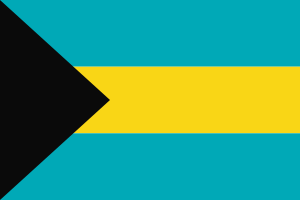
Rum Cay is in Bahamas today. The atlas holds no record volumes for it yet, which is a gap in the atlas and not a finding about the records. The ground has flown 5 flags.
Nothing here has changed since this page began being watched on 2026-09-23. Follow what changes.
Comes out as a sheet for the reading room — what to ask for, who holds it, and every link written out in full.
This is a region, not a town — the marker sits at its centre, not at a building. Records filed at this level are usually held for the whole region.
This place
Where to begin
You know your family came from Rum Cay. Here is the order I would work in, cheapest and easiest first — and what to do when that runs out.
-
Work out which country your year belongs to
This is the step almost everybody skips, and it is the commonest reason a record that exists cannot be found. The ground did not move; the border did. A baptism here in one decade may sit in a different country's archive from one twenty years later.
Years Who governed Whose archive 1492–1648  Spanish claim — the Lucayan islands emptied
no archive holds this yet 1648–1782  English and British settlement — Eleuthera and New Providence
National Archives of the Bahamas · The National Archives — Discovery 1782–1783 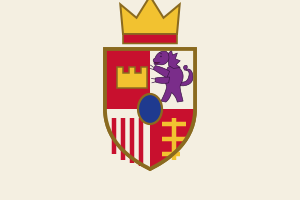 Spanish capture
no archive holds this yet 1783–1834  British Bahamas after the Loyalists
National Archives of the Bahamas · The National Archives — Discovery 1834–1973 British Bahamas after emancipationNational Archives of the Bahamas · The National Archives — Discovery 1973–2026  The Bahamas — independent from 10 July 1973
National Archives of the Bahamas Do this: take the year you are looking for, find its row, and note the archive. That is the one to search — not the one the village is in today.
-
When you run out — and you will
Everything above is what this atlas knows. It is not everything there is. Nine places in ten on this map have never been surveyed by anybody, so a gap here is usually our silence rather than the record's absence.
Do this: write to the archive named in the era table for your year, even if we hold nothing for it. Then tell us what you found — a gap somebody has personally closed is the most useful thing a stranger can give this map.
The archives named above: National Archives of the Bahamas · The National Archives — Discovery. What each one holds and why.
How this place is on the map: listed from GeoNames as an administrative area so that a name can be found. No registers have been walked here.
Whose archive this ground was
Rum Cay sits in The Bahamas. Which empire held it decides which archive holds its records — and for some of these years that is not the archive you would guess.
| Years | Who held it | Whose archive that means |
|---|---|---|
| 1492–1648 | Spanish claim — the Lucayan islands emptied | no registers survive Columbus landed at Guanahani on 12 October 1492. The Spanish removed most of the Lucayans as labourers by 1520, leaving the islands largely depopulated for about 130 years. |
| 1648–1782 | English and British settlement — Eleuthera and New Providence | National Archives of the Bahamas · The National Archives — Discovery Bermudian settlers founded the first lasting colony on Eleuthera in 1648 and Nassau was founded as Charles Town in 1670. Spain burned the Eleuthera and New Providence settlements in 1684-1686 and New Providence was resettled from Jamaica in 1686. Woodes Rogers arrived as governor in July 1718. |
| 1782–1783 | Spanish capture | no registers survive Spain captured the islands in 1782 and a Loyalist expedition retook them in 1783. The Peace of Paris of 1783 ceded them to Britain in exchange for East Florida. |
| 1783–1834 | British Bahamas after the Loyalists | National Archives of the Bahamas · The National Archives — Discovery Loyalist land grants tripled the population and enslaved Africans were brought in for plantation labour. Britain abolished the slave trade in 1807 and liberated Africans were resettled in the Bahamas. |
| 1834–1973 | British Bahamas after emancipation | National Archives of the Bahamas · The National Archives — Discovery Emancipation took effect in August 1834. The Bahamas gained self-government in 1964. |
| 1973–2026 | The Bahamas — independent from 10 July 1973 | National Archives of the Bahamas |
No volumes recorded here yet.
Sources for Bahamas
The national and regional archives that cover Bahamas, the national archive and library from Wikidata, and the 49 services that cover every country — FamilySearch, Ancestry, MyHeritage, Geneanet, Find a Grave and the rest — are the same for every place in Bahamas, so they are listed once: all the sources for Bahamas.
FamilySearch collections that reach here
A collection is a claim over an area, not a book standing in this town — so these are ranked by how specifically they reach Rum Cay. A free account is needed to open the images, and some are restricted to a Family History Centre.
Narrower than the country but catalogued under some other district. Listed because a collection's title is not always where its records end, and never because it covers this ground.
- Caribbean, Deaths and Burials, 1790-1906 ↗ 1790–1906 6,598 records covers Puerto Rico 1054 km
- Caribbean, Births and Baptisms, 1590-1928 ↗ 1590–1928 44 records covers Puerto Rico 1054 km
Worth searching, and worth knowing it is a national index rather than a local one.
- Bahamas, Civil Registration, 1850-1959 ↗ 1850–1959 293,258 records 124 km
- Bahamas, Births, 1850-1891 ↗ 1850–1891 52,700 records 124 km
See who held Rum Cay between 1800 and 1920 →
The jurisdiction answer — which empire held this ground, and therefore
whose archive — could only be got at from the map until now. This opens it there, on
1863; drag the year from any point between 1492 and
2026.
Everything in Bahamas · All 57354 places · Correct something on this page