Talsu novads in Talsu novads, Latvia. 0 record volumes and who holds them.
Talsu novads is in Latvia today. The atlas holds no record volumes for it yet, which is a gap in the atlas and not a finding about the records. The ground has flown 5 flags.
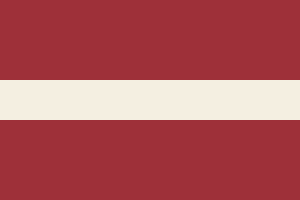
Last changed 2026-09-30 · first mapped 2026-09-23 Follow what changes.
Comes out as a sheet for the reading room — what to ask for, who holds it, and every link written out in full.
This is a region, not a town — the marker sits at its centre, not at a building. Records filed at this level are usually held for the whole region.
This place
Where to begin
You know your family came from Talsu novads. Here is the order I would work in, cheapest and easiest first — and what to do when that runs out.
-
Work out which country your year belongs to
This is the step almost everybody skips, and it is the commonest reason a record that exists cannot be found. The ground did not move; the border did. A baptism here in one decade may sit in a different country's archive from one twenty years later.
Years Who governed Whose archive 1561–1721  Sweden in the north, the Duchy of Courland in the south
Saaga — Estonian National Archives · Raduraksti — Latvian State Historical Archives · Riksarkivet — Digitala forskarsalen · FamilySearch 1721–1918  Russian Empire — the Baltic governorates
Saaga — Estonian National Archives · Raduraksti — Latvian State Historical Archives · FamilySearch 1918–1940  Estonia and Latvia, independent
Saaga — Estonian National Archives · Raduraksti — Latvian State Historical Archives · Lietuvos archyvai (Lithuanian State Archives) 1940–1991  Soviet Union — Estonian and Latvian SSRs, with a German occupation 1941–44
Arolsen Archives · Yad Vashem — Central Database of Shoah Victims' Names · Bundesarchiv 1991–2026  Estonia and Latvia
Saaga — Estonian National Archives · Raduraksti — Latvian State Historical Archives · FamilySearch Do this: take the year you are looking for, find its row, and note the archive. That is the one to search — not the one the village is in today.
-
The things that catch people out here
1721–1918, Russian Empire — the Baltic governorates. THE TRAP, and it is a surname trap. Serfdom ended here in 1816–1819, decades before the rest of the empire, and the peasantry had no hereditary surnames until then. Estonian and Latvian surnames were ISSUED between 1822 and 1835, parish by parish, often by the manor. Before that date your family has a first name and a farm name and nothing else, and no amount of searching a surname will find them.
-
Find the parish, because that is where the book was
Before civil registration, the parish priest kept the register. A village without its own church was written into a neighbour's book.
- Kupfer's Chapel in Talsi
- Lutheran church in Talsi
- Lutheran church in Stende
- Nurmes Lutheran church in Lauciene
-
When you run out — and you will
Everything above is what this atlas knows. It is not everything there is. Nine places in ten on this map have never been surveyed by anybody, so a gap here is usually our silence rather than the record's absence.
Do this: write to the archive named in the era table for your year, even if we hold nothing for it. Then tell us what you found — a gap somebody has personally closed is the most useful thing a stranger can give this map.
The archives named above: Saaga — Estonian National Archives · Raduraksti — Latvian State Historical Archives · Riksarkivet — Digitala forskarsalen · FamilySearch · Lietuvos archyvai (Lithuanian State Archives) · Arolsen Archives · Yad Vashem — Central Database of Shoah Victims' Names · Bundesarchiv. What each one holds and why.
How this place is on the map: listed from GeoNames as an administrative area so that a name can be found. No registers have been walked here.
Whose archive this ground was
Talsu novads sits in Livonia, Estonia and Courland. Which empire held it decides which archive holds its records — and for some of these years that is not the archive you would guess.
| Years | Who held it | Whose archive that means |
|---|---|---|
| 1561–1721 | Sweden in the north, the Duchy of Courland in the south | Saaga — Estonian National Archives · Raduraksti — Latvian State Historical Archives · Riksarkivet — Digitala forskarsalen · FamilySearch Lutheran parish registers from the seventeenth century where they survive, kept in German by a Baltic German clergy over an Estonian- and Latvian-speaking peasantry. |
| 1721–1918 | Russian Empire — the Baltic governorates | Saaga — Estonian National Archives · Raduraksti — Latvian State Historical Archives · FamilySearch THE TRAP, and it is a surname trap. Serfdom ended here in 1816–1819, decades before the rest of the empire, and the peasantry had no hereditary surnames until then. Estonian and Latvian surnames were ISSUED between 1822 and 1835, parish by parish, often by the manor. Before that date your family has a first name and a farm name and nothing else, and no amount of searching a surname will find them. |
| 1918–1940 | Estonia and Latvia, independent | Saaga — Estonian National Archives · Raduraksti — Latvian State Historical Archives · Lietuvos archyvai (Lithuanian State Archives) Civil registration begins, and the 1935 Latvian census is a full household listing. Baltic German names are Estonianised and Latvianised in these years, by choice and by campaign. |
| 1940–1991 | Soviet Union — Estonian and Latvian SSRs, with a German occupation 1941–44 | Arolsen Archives · Yad Vashem — Central Database of Shoah Victims' Names · Bundesarchiv The 1941 and 1949 deportations, and the Umsiedlung that took almost the entire Baltic German population to the Reich in 1939–41. If the family was German-speaking and disappears around 1939, it did not die; it was resettled, and Germany holds the file. |
| 1991–2026 | Estonia and Latvia | Saaga — Estonian National Archives · Raduraksti — Latvian State Historical Archives · FamilySearch Estonia's Saaga is free and complete enough to be startling; Latvia's Raduraksti needs only an account. |
No volumes recorded here yet.
The nearest parishes
A church is a parish and a parish is where a register is kept — the register of a hamlet with no church of its own is kept at the church it walked to, so the distance is the useful part. Wikidata's coverage is very uneven: 34,612 churches in England against 105 in central Istria, so a short list here means thin data and not an empty landscape. Unchecked, and only inside a mapped record region.
- Kupfer's Chapel in Talsi ↗ 0.4 km
- Lutheran church in Talsi ↗ 0.9 km
- Lutheran church in Stende ↗ 5.9 km
- Nurmes Lutheran church in Lauciene ↗ 10.2 km
- Lutheran church in Valdemārpils ↗ 13.9 km
Where the burials are
The other end of a parish: the register records the burial and the ground holds it, and a family that left no other trace very often left a stone. These are points on a map, not record collections — from Wikidata and OpenStreetMap, nobody here has visited one, and whether the burial register survives is a question for the parish or the municipality above. Grounds OpenStreetMap has not named are here too. They used to be left out, on the reasoning that a shape with no name is not a place anyone can ask about — which cost Senj its own graveyard, 2 km away and unnamed, while a named one 7 km off was all this page would show. Being unnamed is a fact about the map data, not about the ground. Only inside a mapped record region.
- Jaunā kapsēta ↗ 0.9 km OpenStreetMap
- Vācu kapsēta ↗ 1 km OpenStreetMap
- Liepu kapi ↗ 1.1 km OpenStreetMap
- Padomju varas cīnītāju kapi ↗ 1.1 km OpenStreetMap
- Eglaines kapi ↗ 1.2 km OpenStreetMap
Sources for Latvia
The national and regional archives that cover Latvia, the national archive and library from Wikidata, and the 49 services that cover every country — FamilySearch, Ancestry, MyHeritage, Geneanet, Find a Grave and the rest — are the same for every place in Latvia, so they are listed once: all the sources for Latvia.
FamilySearch collections that reach here
A collection is a claim over an area, not a book standing in this town — so these are ranked by how specifically they reach Talsu novads. A free account is needed to open the images, and some are restricted to a Family History Centre.
Worth searching, and worth knowing it is a national index rather than a local one.
- Estonia, Church Books and Synagogue Registers, 1590-1941 ↗ 1590–1941 6,983,400 records 280 km
- Estonia, Lutheran Church Family Lists, 1603-1980 ↗ 1603–1980 2,804,748 records 280 km
- Estonia, Petseri County, Surname Register Cards, 1921-1923 ↗ 1921–1923 0 records 280 km
…and 11 more: every FamilySearch collection for Latvia, on the country page.
See who held Talsu novads between 1800 and 1920 →
The jurisdiction answer — which empire held this ground, and therefore
whose archive — could only be got at from the map until now. This opens it there, on
1863; drag the year from any point between 1561 and
2026.
Everything in Latvia · All 57354 places · Correct something on this page