Zemun, Serbia in Serbia, also written Opstina Zemun, Semlin, Semlino, Taurunum, Zemlen, Zimony. 2 record volumes covering 1910–1914, and who holds them.
Zemun, Serbia is in Serbia today. The atlas holds 2 record volumes covering 1910–1914. The ground has flown 7 flags.
Also written: Opstina Zemun, Semlin, Semlino, Taurunum, Zemlen, Zimony.
Last changed 2026-11-04 · first mapped 2026-09-23 Follow what changes.
Comes out as a sheet for the reading room — what to ask for, who holds it, and every link written out in full.
This place
Where to begin
You know your family came from Zemun, Serbia. Here is the order I would work in, cheapest and easiest first — and what to do when that runs out.
-
Search both names, not one
This place has been written down as Zemun, Serbia, Opstina Zemun, Semlin, Semlino, Taurunum, Zemlen, Zimony. A catalogue indexed under the old name will not answer to the new one, and most people never find out they were searching the wrong word.
Do this: search each name separately on every site below. Write the list down; you will need it every time.
-
Work out which country your year belongs to
This is the step almost everybody skips, and it is the commonest reason a record that exists cannot be found. The ground did not move; the border did. A baptism here in one decade may sit in a different country's archive from one twenty years later.
Years Who governed Whose archive 1500–1718 Ottoman Empire — Sanjak of Smederevo FamilySearch 1718–1739  Habsburg Kingdom of Serbia
FamilySearch · ANNO — Austrian Newspapers Online 1739–1804 Ottoman Empire — Sanjak of Smederevo FamilySearch 1804–1813  Revolutionary Serbia (the First Serbian Uprising)
Arhiv Srbije · FamilySearch 1813–1815 Ottoman rule restored FamilySearch 1815–1882 Principality of SerbiaArhiv Srbije · FamilySearch 1882–1918 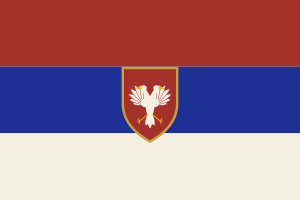 Kingdom of Serbia
Arhiv Srbije · FamilySearch 1918–1941  Kingdom of Serbs, Croats and Slovenes, then Yugoslavia
Arhiv Srbije · FamilySearch 1941–1944  German military administration — Territory of the Military Commander in Serbia
Arolsen Archives · Arhiv Srbije 1944–1992  Yugoslavia — SR Serbia
Arhiv Srbije · FamilySearch 1992–2026 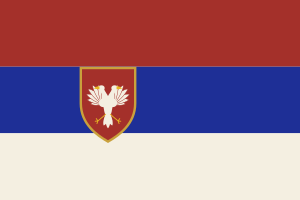 Serbia
Arhiv Srbije · FamilySearch Do this: take the year you are looking for, find its row, and note the archive. That is the one to search — not the one the village is in today.
-
Start here — Images, free, but you must make an account first
- Deaths (Umrli) 1911-1913 1911–1913
- Marriages (Vjenčani) 1912-1914 Deaths (Umrli) 1910-1913 1910–1914
-
When you run out — and you will
Everything above is what this atlas knows. It is not everything there is. Nine places in ten on this map have never been surveyed by anybody, so a gap here is usually our silence rather than the record's absence.
Do this: write to the archive named in the era table for your year, even if we hold nothing for it. Then tell us what you found — a gap somebody has personally closed is the most useful thing a stranger can give this map.
The archives named above: FamilySearch · ANNO — Austrian Newspapers Online · Arhiv Srbije · Arolsen Archives. What each one holds and why.
Opstina ZemunSemlinSemlinoTaurunumZemlenZimony
If the document in your hand says one of these, this is the place it means.
How this place is on the map: entered by hand, with its collections attached by a person, rather than imported from a gazetteer list.
Whose archive this ground was
Zemun, Serbia sits in Serbia (Šumadija and the Morava). Which empire held it decides which archive holds its records — and for some of these years that is not the archive you would guess.
| Years | Who held it | Whose archive that means |
|---|---|---|
| 1500–1718 | Ottoman Empire — Sanjak of Smederevo | FamilySearch |
| 1718–1739 | Habsburg Kingdom of Serbia | FamilySearch · ANNO — Austrian Newspapers Online The Treaty of Passarowitz (21 July 1718) gave the Habsburgs the land south of the Sava and Danube, with Belgrade as capital; the Treaty of Belgrade (18 September 1739) returned it to the Ottomans. |
| 1739–1804 | Ottoman Empire — Sanjak of Smederevo | FamilySearch |
| 1804–1813 | Revolutionary Serbia (the First Serbian Uprising) | Arhiv Srbije · FamilySearch The Orašac Assembly elected Karađorđe to lead the uprising in 1804. |
| 1813–1815 | Ottoman rule restored | FamilySearch Ottoman rule was restored in October 1813, until the Second Serbian Uprising of 1815. |
| 1815–1882 | Principality of Serbia | Arhiv Srbije · FamilySearch The Ottomans recognised the state in the 1830 Hatt-i Sharif; the last Ottoman garrison left Belgrade Fortress in 1867 and the Treaty of Berlin (1878) gave international recognition. |
| 1882–1918 | Kingdom of Serbia | Arhiv Srbije · FamilySearch |
| 1918–1941 | Kingdom of Serbs, Croats and Slovenes, then Yugoslavia | Arhiv Srbije · FamilySearch |
| 1941–1944 | German military administration — Territory of the Military Commander in Serbia | Arolsen Archives · Arhiv Srbije German military administration began on 22 April 1941; a German-controlled puppet Government of National Salvation under Milan Nedić was set up on 29 August 1941; the territory was liberated on 20 October 1944. |
| 1944–1992 | Yugoslavia — SR Serbia | Arhiv Srbije · FamilySearch |
| 1992–2026 | Serbia | Arhiv Srbije · FamilySearch |
The volumes
Grouped by what it costs to look, most open first, which is the order worth trying them in. The film number and denomination are from FamilySearch's own catalogue. Nobody here has opened any of them. You can, though: mark the pages you have searched on any row and this browser will remember where you stopped.
The ground worth walking
Within 25 km — 3 places. These neighbours hold 1 catalogued volume between them.
A register belongs to a parish, not to a village. A hamlet with no church of its own was written into the book of the church it walked to — and that book is catalogued under the other place's name. This is the ground to search before concluding a record does not exist.
- Stara Pazova24.0 km1 volume
Correctly placed and unread. A gap here is this atlas's silence, not the record's — the registers may well exist and nobody has walked them.
The sources for Serbia
National and regional sources that cover this ground whether or not anybody has walked it here — which makes them the answer, not the consolation, for a place with no volumes recorded on it. A country-wide body is listed whatever the distance; a provincial archive is a claim over its own province, so those are the nearest ones. 9 more cover Serbia and are on the country sources page.
- Kriegsarchiv — Österreichisches Staatsarchiv Nobody has walked this one yet Vienna, Austria
The Kriegsarchiv (Vienna) holds Austro-Hungarian military records. For soldiers who died 1914-1918 the Kriegsarchiv's own research page names: the printed casualty lists (digital copies at the Upper Austrian State Library, and the 'Nachrichten über Verwundete und Kranke' in the Czech Digital Library; - Hungaricana Images, free, no account Budapest, Hungary
The Hungarian cultural heritage portal — maps, censuses, urbaria and archival finding aids for the whole Kingdom of Hungary, not today's borders. - Magyar Nemzeti Levéltár (Hungarian National Archives) A catalogue entry only — the paper is not photographed Budapest, Hungary
The archives of the Kingdom of Hungary, which until 1920 meant Slovakia, Transylvania, the Banat and Croatia as well. Civil registration duplicates from 1895 are here even where the ground is now in another country. - Arhiv Srbije On paper, in the building Belgrade, Serbia
The Serbian state archive. Church registers for the pre-1918 Kingdom, and the administrative record of a state that was Ottoman ground until 1878. - Дигитална БМС (Digital Library of Matica Srpska, Novi Sad) Nobody has walked this one yet Novi Sad, Serbia
Digital library of the Matica Srpska library in Novi Sad. The menu lists manuscripts, Serbian books from the 15th-17th, 18th and 1801-1867 periods, periodicals and newspapers, calendars and almanacs, small printed matter, journals and collections, postcards, posters, photographs, maps and city plans, and books after… - Narodna biblioteka 'Radoje Domanovic' Leskovac Nobody has walked this one yet Leskovac, Serbia
Public library for the Jablanica District in Leskovac with 11 departments. The local-history department holds Leskovac and Jablanica monographs, about 3,500 issues of serials, postcards, photographs, posters and manuscripts of local writers; old and rare books are used digitally (digitalnabiblioteka.rs). - Centropa Images, free, no account
An archive of Jewish family memory from Central and Eastern Europe. The home page states 1,230 interviews conducted in 15 European countries and about 25,000 family photographs, with a further Sephardic set for the Balkans and Turkey. - Verein für Computergenealogie — Verlustlisten (des.genealogy.net) Nobody has walked this one yet Vienna, Austria
Volunteer-transcribed databases of the printed First World War casualty lists, run by the Verein für Computergenealogie on its Data Entry System. One project covers the Austro-Hungarian Verlustlisten, built with the Austrian association Familia Austria (search fields: surname, first name, officer or enlisted, rank,… - Ex-Yu Genealogy (sources for post-Yugoslav family history) A catalogue entry only — the paper is not photographed
Blog-style guide, begun in 2012 in Serbo-Croatian and now with more English, to genealogical research in the former Yugoslavia: Slovenia, Croatia, Bosnia and Herzegovina, Serbia, Montenegro, Kosovo and North Macedonia. - Историјски архив Београда (Historical Archives of Belgrade) Images, free, account needed Belgrade, Serbia — 6 km
City archive of Belgrade. Its fonds and collections pages include a collection of church registers (crkvene matične knjige): 823 books, 1721-1919, in Serbian and Latin, described as first-rank sources of baptisms, marriages and deaths, and noting that keeping registers became compulsory in Serbia around 1837.
Sources for Serbia
the national archive and library from Wikidata, and the 49 services that cover every country — FamilySearch, Ancestry, MyHeritage, Geneanet, Find a Grave and the rest — are the same for every place in Serbia, so they are listed once: all the sources for Serbia.
See who held Zemun, Serbia between 1800 and 1920 →
The jurisdiction answer — which empire held this ground, and therefore
whose archive — could only be got at from the map until now. This opens it there, on
1863; drag the year from any point between 1500 and
2026.
See Zemun, Serbia on the map →
Everything in Serbia · All 57354 places · Correct something on this page